Manufacturing firms increased their stock of bad loans by 48 percent in the 12 months to June 2023, giving a new perspective to the struggles of an industry now giving banks sleepless nights.
Data from the Central Bank of Kenya’s quarterly economic review revealed that the sector manufacturers added a net of Sh38.2 billion in non-performing loans in one year to hit a record high of Sh117.5 billion at the end of the second quarter.
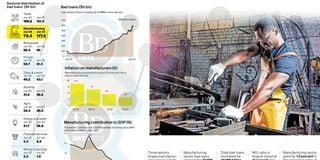
The jump means the sector now solely accounts for a fifth of the total non-performing loans in the banking sector second from trade, which had bad loans worth Sh121.9 billion.
The manufacturing sector’s contribution to the country’s total economic output stood at 7.8 percent in 2022 being the first increase in contribution in nine years from a record low of 7.4 percent in 2021.
The sector has faced headwinds in recent times coupled with unfavourable government policies such as an increase in energy prices, which is hurting its ability to repay loans.
A sustained depreciation in the local currency since the pandemic has led to significant increases in import prices of input that primarily drive the sector.
The high cost of doing business in the country, compounded by bureaucracies, has led to big industry players closing shop or shifting their operating bases to other countries with favourable policies in the region.
Official statistics indicate that the sector is the second biggest employer in the formal space, employing about 352,600 Kenyans.
The producer price index, which measures price changes in production inputs, showed that manufacturers experienced a record 17.4 percent rise in input costs last year.
The rising costs of inputs then eased slightly to 13 percent in the year to March, then 9.2 percent in the one year to June 2023.
The total stock of non-performing loans at the end of June stood at Sh576.4 billion, a 12 percent growth from Sh514.4 billion at the end of June 2022.
Other sectors that reported a significant rise in bad loans over the 12 months were trade and households, which added Sh12.1 billion and Sh12.7 billion, respectively.