Time flies with great content! Renew in to keep enjoying all our premium content.
Prime
Aflatoxin costs maize farmers billions of shillings
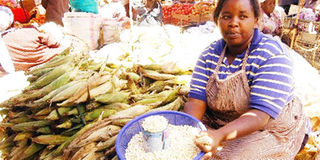
Green maize. Aflatoxin contamination can be avoided if farmers learn to use micro-silos and improve on post-harvest handling and storage. Photo/WILLIAM OERI
Maize farmers have lost billions of shillings in reduced supply contracts because of delivering contaminated maize, a move that has slowed efforts to commercialise small scale agriculture.
It emerged last week that the contaminated maize had found its way to the dining rooms of many Kenyan homes after it was sold to rogue millers and unsuspecting unprocessed maize consumers.
Unga Group, World Food Programme, National Cereal and Produce Board (NCPB), and Lesiolo Grain Handlers all reported turning away significant amounts of maize from farmers because of contamination with a killer fungus known as aflatoxin.
“The problem has been so big in eastern Kenya that NCPB has not practically touched any grain from that region,” said NCPB operations manager Ernest Ogwara.
The region suffered 70 per cent maize contamination in last year’s harvest season, dealing a deadly blow to predominant small scale farmers.
The region is among beneficiary of farm input subsidies, which means efforts meant to increase yield per hectare were wasted.
It has also held back the ability of farmers to earn from subsistence farming, a trend that was expected to facilitate commercialisation of small scale farming by producing enough for household consumption and surplus for sale with the money being used to finance the next planting season.
Unga Holdings managing director Nick Hutchinson said the company suffered shortage of raw materials because of rejecting contaminated maize.
“We had to turn back several deliveries. It affected availability of our raw materials for a while,” he said.
An official of the World Food Programme, who cannot be named because he is not the official spokesperson for the relief body, said they declined supplies from Embu, Makueni, Bura and parts of Nyanza.
Lesiolo Grain Handlers also rejected five consignments of maize deliveries or about 100 tonnes because of contamination, said Kevin Manyara.
He said the contamination extended to other grains like beans.
While the government offered to buy four million bags of contaminated maize last year at a cost of Sh1,000 per bag to ease farmers losses, NCPB — the state buying agency— said only 716 bags were delivered to its centre in Machakos.
“We do not know where the rest of the maize went to,” said Mr Ogwora.
Agriculturists meeting in Nairobi this week to deliberate on the problem said contaminated maize can filter into the market because tests by the government take two weeks before results are known.
And because 90 per cent of the Kenya maize market is informal, that is enough time to dispose of the maize through several buyers and move it to other regions.
Instant testing kits are unreliable, the agriculturists said, because they give conflicting results of maize packaged in the same bag.
Aflatoxin killed 150 people in parts of Eastern Province in 2004. It can cause liver cancer and brain damage. It develops in maize after exposure to a lot of moisture during storage.
Twelve members of two families died in Machakos from liver cancer in 1981 after they ate maize with unusually high levels of aflatoxin, according to Lancet — the medical journal.
The contamination can be avoided if farmers are empowered to use micro-silos and improve overall post-harvesting handling and storage.
One opportunity is the use of a metal silos, an airtight cylindrical metal structure that can be constructed by Jua Kali artisans under supervision of food technologists.
Progress slow
The metal silos can store up to 20 bags of maize, an average harvest for a Kenyan home, and do not require special storage structures.
The use of silos has been implemented by the Centre for Maize and Wheat Research and Catholic Relief Services in parts of Embu and Mbeere areas.
Bejamin Njue, who assembles silos in Kiritiri, Embu County, said they have become popular with farmers because they save post-harvest losses.
A silo with capacity to store one bag of maize retails at Sh3,000 while that with capacity to store 20 bags costs Sh22,000.
Last year, the government expressed interest in working with research groups and non-governmental organisations to make such equipment available to farmers through subsidies, but we could not ascertain progress of the plans.
The National Youth Service received equipment from the Chinese government last year to build maize drying facilities in commonly affected areas, but progress has been slow.