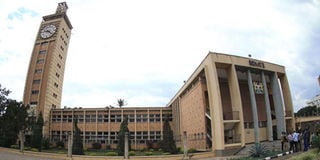
The controversial Huduma Namba Bill and a proposed law that seeks to cut petroleum levies will dominate debate this year when the sixth and the last session of the 12th Parliament begins.
The House reconvenes on January 25 with a full in-tray as MPs rash to conclude crucial legislation ahead of the August 9 General Election.
The State-backed Huduma Namba Bill seeks to compel Kenyan adults to have the new ID to access government services, such as getting treatment at State hospitals, marrying or filing tax returns.
The Petroleum Products’ (Taxes and Levies) (Amendment) Bill, 2021 proposes huge cuts on taxes and levies imposed on petroleum products, a move that could lead to the cost of fuel dropping as low as Sh100 from the current Sh129.72 a litre.
The sixth and last session of the current Parliament will also face immense pressure to pass the 2022/23 budget by April before the House adjourns indefinitely to pave the way for the General Election.
MPs will also give urgent attention to election-related Bills such as the contentious Political Parties (Amendments) Bill 2021, which provides for the formation of a coalition political party.
Other proposed laws that will receive priority in the House include the passage of the Higher Education Loans Board (Amendment) 2021, the Whistleblowers Protection Bill, the Coffee Bill, the Investment Protection Bill and the Public Audit Bill.
The State is seeking to pass the Huduma Namba Bill 2021 to unlock an impasse in the roll-out of Huduma Namba cards to Kenyans after the High Court declared the illegal for conflicting with the Data Protection Act.
The government had spent more than Sh10 billion in the exercise, which in September saw it issue only 7.3 million cards even as it seeks to withdraw the current national identity card in the next few months.
The Huduma Namba Bill 2021 aims to curb unlawful use of information like names, date of birth, postcode and residences.
The proposed law ropes in the provisions of the Data Protection Act in the processing of personal data under Huduma Namba.
The Bill also targets individuals who have evaded paying taxes by requiring that the Huduma Namba serves as Kenya Revenue Authority’s personal identification number (PIN).
The MPs will also be required to give priority to the passage of the Petroleum Products’ (Taxes and Levies) (Amendment) Bill proposes a reduction of the Petroleum Development Levy charged on super petrol and diesel from Sh5.40 to Sh2.90.
The Bill further proposes changes to the VAT Act, to reduce the value-added tax from eight percent to four percent to reflect the change in the tax rate for petroleum products.
The Bill stems from concerns raised in a public petition to Parliament on the drastic increase in prices of petroleum.
SHARP RISE
Kenya imposed fuel price controls in December 2010 following a public uproar over a sharp rise in petroleum prices.
Taxes and levies account for the biggest chunk of the price of fuel and products at Sh58.81 per litre of petrol, diesel (Sh66.61) and kerosene (Sh41.14).
The product cost accounts for Sh60.35 per litre of petrol, Sh53.88 for diesel and Sh54.44 for kerosene.
Distribution and storage accounts for Sh3.17, Sh2.9 and Sh2.88 for petrol, diesel and kerosene, respectively while margins take Sh12.39 for petrol and Sh12.36 per litre of diesel and kerosene.
Others are Railway Development Levy, Anti-adulteration Levy, Merchant Shipping Levy and the Import Declaration Fee.
The parliamentary Finance and Planning Committee members have argued that the landing costs account for more than 45 percent while taxes and levies account for more than 35 percent.
Unlock a world of exclusive content today!Unlock a world of exclusive content today!