Oparanya team seeks troubled saccos’ special funds scheme

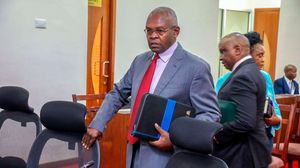
The Cabinet Secretary for Co-operatives Wycliffe Oparanya (centre) with Marlene Shiels (left) the Chairperson of the Committee of Experts on Sacco Societies Act Review among other officials launch the report on Transformation of the Sacco System in Kenya during the 10th Annual Sacco Leaders Summit in Mombasa in this photo taken on December 8, 2025.

Photo credit: File | Nation Media Group

A committee of experts appointed by Co-operatives and MSMEs Development Cabinet Secretary Wycliffe Oparanya has recommended the establishment of a special fund to rescue distressed but viable savngs and co-operative societies (saccos) from collapse.

The committee was tasked to: review the legislative and regulatory framework, propose reforms to strengthen deposit protection and liquidity management, develop pathways for harmonisation of oversight across all Saccos and benchmark Kenya’s system against global best practices.

A report from the committee of experts says a Stabilisation Protection Scheme (SPS) will help save distressed Saccos from collapsing and causing a confidence crisis in a sector that holds over Sh1 trillion in deposits.

The committee, which is chaired by Marlene Shiels, who is also the CEO of UK-based Capital Credit Union, says the liquidity support model has successfully worked in a country like Ireland and would be ideal in the Kenyan market, helping Saccos that cannot be revived to merge with others without triggering market panic.

The experts said SPS, together with the proposed Deposit Guarantee Fund and a Central Liquidity Facility, would offer deposit protection and liquidity support to the sector players.

The proposal mirrors the emergency borrowing window that banks in distress enjoy from the Central Bank of Kenya (CBK) for survival, when they cannot borrow from their fellow banks.

The SPS will support struggling Saccos through expert intervention and merger facilitation or orderly closure for saccos that cannot be rescued.

“The development of a Stabilisation Protection Scheme (as was seen in Ireland), is needed as a matter of priority to support Saccos that can be “saved” with the right expertise and help. For those Saccos that cannot be saved, the SPS should recommend either a Sacco to merge into a stronger institution or liquidate,” says the report.

“The objective of the stabilisation protection scheme/fund is to allow a Sacco to trade through its difficulties, or to support and facilitate an orderly transfer of engagements (merger), thereby maintaining services to members.”

Currently, the Sacco sector in Kenya has no legal mechanism to support Saccos experiencing difficulties, even if intervention could help bring them back into stability. Sacco Societies Regulatory Authority (Sasra) usually gives restricted licences to such struggling saccos, with many ending up collapsing in the process.

In February, Sasra issued five saccos—Dumisha, Bi-High, Metropolitan National, Ol’ Kaunsel and Digital Media—with restricted licences, meaning they can operate as credit-only Saccos but are prohibited from taking new deposits or recruiting new members.

According to the committee, since the SPS would be taking funds from member Saccos, it should be organised as a secondary co-operative and regulated by Sasra.

“A stabilisation protection scheme also needs to be written into law if it is to collect funds from Saccos,” said the committee.

In Ireland, the sacco sector has the Irish Stabilisation Protection Scheme, which reports to the board of the Irish League of Credit Unions.

The scheme provides a capital support mechanism for undercapitalised credit unions and assists them to trade out of difficulty or to transfer engagements to another credit union. The scheme also protects reputational damage by avoiding liquidations and wind-ups.

The proposed implementation plans show that the experts have recommended the introduction of the scheme by the end of this year.

Follow our WhatsApp channelfor the latest business and markets updates.

PAYE Tax Calculator

Note: The results are not exact but very close to the actual.