Recurrent spending exceeds estimates by Sh135bn

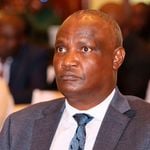
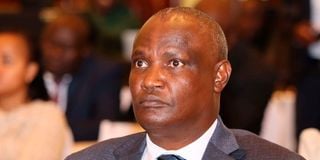
National Treasury and Economic Planning Cabinet Secretary John Mbadi.

Photo credit: Bonface Bogita | Nation Media Group

The government’s recurrent expenditure surpassed initial estimates for the year ended June 30,2025 by Sh134.72 billion despite President William Ruto’s pledge to cut costs in the wake of the collapsed Finance Bill 2024.

Data published by Treasury Cabinet Secretary John Mbadi shows day-to-day expenditure on items such as remuneration of staff, operations and maintenance, as well as administration, amounted to Sh1.44 trillion compared with Sh1.3 trillion estimates following the first review of the budget.
The estimates, which exclude priority items like public debt service and pensions, grew 10.30 percent following two further reviews in February and June.

State House and Office of the President at Harambee House, Deputy President Kithure Kindiki’s office, State Department for Internal Security and National Administration, National Intelligence Service, and National Police Service were amongst the main drivers of the recurrent expenditures last financial year.

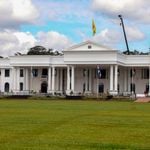
The State House failed to adhere to austerities announced by Dr Ruto after spending a record Sh11.64 billion, a jump of 170.38 percent over the Sh4.31 billion estimates passed by lawmakers in the wake of the fall of the tax bill.

Spending at Dr Ruto’s office at Harambee House, on the other hand, increased 27.01 percent to Sh4.55 billion from Sh3.58 billion estimated last August.

Thousands of youthful demonstrators poured onto the streets of Kenya’s major towns across the country from late June to July last year to protest additional taxation amidst the elevated cost of living and a general lack of decent job opportunities.

The anti-government protesters also cited poor governance and alleged embedded corruption in government as reasons for social unrest, which left at least 60 civilians dead.

The countrywide protests, largely organised by youth on social media, prompted President Ruto to drop the Finance Bill 2024 and form a broad-based government, which has included five members of the main opposition party, ODM.

The reoganisation of the government, which saw all ministers but one sacked and nine re-appointed to the Cabinet, led to the impeachment of Rigathi Gachagua as Deputy President last October.

The Treasury data shows the recurrent spending by the Office of the Deputy President amounted to Sh3.21 billion at the end of June, 23.91 percent more than the Sh2.59 billion estimated in August last year.

The Interior department spent Sh36.81 billion in the review period, 32.73 percent more than the Sh27.73 billion estimate.

The National Intelligence Service's recurrent expenses amounted to Sh58.65 billion, 26.54 percent more than estimates after the fall of the finance bill, while the National Police Service’s stood at Sh115.30 billion, a 6.13 percent rise.

The growth in recurrent budget appeared to go against the austerities announced by Dr Ruto at the beginning of the last financial year, with the review that followed promising to only shield essential expenditure in the Agriculture, Health, and Education sectors from brutal cuts.

"While it could be prudent to reduce expenditures by the amount equivalent to the anticipated revenue shortfall of Sh344.3 billion, this was not tenable given the delicate balance between austerity measures and cushioning the livelihoods of the people and the economy," read a brief in the Supplementary Appropriations Bill 2024.

Some of the austerities included the removal of budgets for the offices of the First and Second ladies, as well as confidential expenditures for the State House and all public offices.

The President also suspended the purchase of new high-end cars, whose cost can top Sh30 million per unit, for the first six months and halved the number of government advisers.

These were among the raft of measures announced by Dr Ruto at State House, Nairobi, on July 5 last year, following youth-led protests against increased tax measures.

Earlier austerities had targeted non-essential expenditures such as printing, advertising, travel, communication supplies and services, training, hospitality, furniture, refurbishment, and vehicle purchase, as well as research and feasibility studies for public offices.

PAYE Tax Calculator

Note: The results are not exact but very close to the actual.