Time flies with great content! Renew in to keep enjoying all our premium content.
Prime
Treasury scrambles to save Sh29bn power grid projects amid delay risk
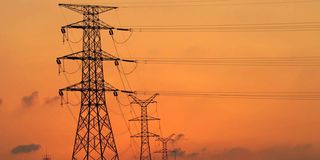
The fast-growing consumption of power has exerted pressure on the existing power transmission network, turning the spotlight on Ketraco to expedite a revamp of the lines.
The Treasury is caught in a fresh race to hire a consultant to oversee the selection of investors to build three high-voltage electricity lines as part of a Sh71.08 billion ($550 million) public-private partnership (PPP) project, signalling the government’s desperation to revamp part of the country’s ageing transmission network.
The PPP Directorate of the National Treasury has reopened the recruitment of a transaction adviser for the power grid projects after a previous attempt to hire the experts to guide them flopped earlier this year.
The PPP Directorate disclosed in January that a bid to hire a transaction adviser for the power grid projects failed after the cost quoted by the lowest bidder for the consultancy works was higher than the budget allocated, rendering the bids unresponsive.
The three lines are part of six new lines that also include a 400 kilovolts (kV) line to be stepped down to a 132 kV line and substations in a Sh31.72 billion project to evacuate power from the proposed nuclear power plant to be built in Siaya County.
This line is expected to be completed by 2028, barring further hitches in the procurement process.
“Evaluation of the bids was completed. The tender was unresponsive. It shall be re-advertised,” said the PPP Directorate.
“The tender was cancelled since the lowest quoted bidder was higher than what was in the budget.”
The lines targeted for construction are the Kwale-Shimoni 220 kilovolt line, the 220kV Kiambere-Maua-Isiolo line, and the 132kV Meru-Maua line, and are key to bolstering power supply in Meru, Isiolo, and the recently constructed Fish Port in Shimoni, Kwale.
Bids for a transaction adviser for power projects are expected to be opened on Friday, indicating urgency by the State to implement the projects.
An overloaded and ageing transmission network in many parts of the country has hampered Kenya Power’s efforts to ensure a steady supply of electricity, putting pressure on Kenya Electricity Transmission Company (Ketraco)—the State firm tasked with building power transmission lines.
The investors will build the lines, own and operate them for a given period to recoup their investment via a tariff on consumer bills, before relinquishing them to Ketraco.
The fast-growing consumption of power has exerted pressure on the existing power transmission network, turning the spotlight on Ketraco to expedite a revamp of the lines.
Power consumption jumped 10 percent last year to 10,820.53 gigawatt-hours, with the country recording six peak demands in that period, highlighting the heavy usage that is straining the transmission network.
The four lines could become the second PPP-funded power transmission project in Kenya after two lines that will be built by the African Development Bank-owned Africa50 and PowerGrid Corporation of India.
Africa50 and PowerGrid will build the 400kV Lessos-Lossuk line and the 220kV Kisumu-Kibos-Kakamega-Musaga line. The total cost of the project, which was closed last month, is $311 million (Sh40.1 billion).
Africa50 and PowerGrid will own, operate, and maintain the lines and the substations for 30 years, allowing them to recoup their investment before handing back the infrastructure to Ketraco.
Ketraco has set the ambitious target to deliver the PPP-funded transmission lines by 2030, which will provide alternative power evacuation routes and increase the capacity of the network to transmit power from local sources and across the region.
Since its inception in 2008, Ketraco has relied on on-lent loans via the National Treasury to build the high voltage lines. Some of the notable financiers of these projects have been the World Bank, the African Development Bank, the French Development Agency, the European Investment Bank, and the Exim Bank of China.
But mounting debt payment obligations, mainly to China, have significantly hurt the ability to tap more loans, forcing a shift to the PPP model to deliver the costly revamp of the electricity transmission network.
Ketraco recently disclosed that it is betting on the PPP model to bridge a funding gap of more than $4 billion (Sh517.8 billion) over the next 20 years.
Heavy debt repayment obligations have significantly squeezed the Exchequer’s ability to fund the delivery of high-voltage power lines.