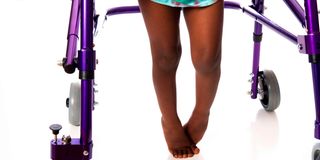
Is your infant showing signs of having exaggerated reflexes, or floppy limbs? These are possible signs that they may be suffering from cerebral palsy. Cerebral palsy (CP) is a congenital disorder, meaning it presents from birth, that affects movement, muscles and posture. It affects the nervous system functions including learning, hearing, seeing, and thinking.
In essence, CP is a group of disorders caused by abnormal brain development or damage that affects a person’s ability to be able to control their muscles. It normally occurs when the baby is still in the womb, during childbirth, or during the first years of life while the brain is still developing. It can occur due to reduced blood or oxygen supply to the brain, an infection caught during pregnancy or an injury to the baby’s head during pregnancy. After birth, CP can occur if the baby has a brain infection such as meningitis. Preterm, low birthweight or being a twin or triplet increases the risk of infants getting CP.