Joseph bows out after a 10-year stint at Safaricom
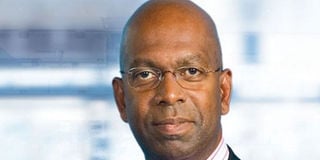
Mr Bob Collymore, who has worked as the Governance Director for Africa at Vodafone and has been on the company’s board for four years, will be the new Safaricom chief executive. Photo/FILE
Telecoms giant Safaricom on Thursday announced that its long-serving chief executive, Mr Michael Joseph, will retire in November, handing corporate Kenya its biggest and most critical executive transition.
The exit of Mr Joseph, who built Safaricom from scratch to become East Africa’s most profitable company in seven years, will be closely watched in the region and is expected to become a case study in succession management.
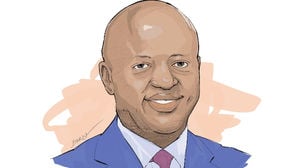
Mr Bob Collymore, who has worked as the Governance Director for Africa at Vodafone and has been on the company’s board for four years, will be the new chief executive.
Mr Joseph’s departure has been on the cards since early this year, when he indicated that he would be leaving the firm.
“I have been involved in Safaricom from its founding. It is in my interest and that of all stakeholders to have a smooth and successful transition when the time comes,” he said.
Vodafone has retained the right to select the company’s chief executive and financial officers and exercised this right in the appointment last year of Chris Tiffin as Safaricom’s CFO.
Mr Joseph jetted into Kenya 11 years ago to take charge of his employer Vodafone’s latest investment in sub-Saharan Africa.
It was under him that Safaricom, then a struggling enterprise, rose to become East Africa’s largest and most successful in terms of earnings.
Safaricom, officially launched its operations in Kenya in 2000 with Vodafone pumping in $20 million.
Among the first challenges that Mr Joseph faced was the failure by the other shareholder in the company — Telkom Kenya — to pump in its expected $30 million share of investment into the operation, that had only 17,000 customers, an outdated network and a huge cash deficit.
Mr Joseph and his team of five, who operated out of a small office in Logonot Place, also had to contend with coming to the market of its main rival KenCell, which had captured the lion’s share of the corporate market.
But Safaricom’s launch strategy — to appeal to the masses, bill in seconds rather than minutes and focus on pre-paid customers — paid off and within months, KenCell’s lead had narrowed.
By 2005, Safaricom’s grip on the Kenyan mobile market was cemented and in 2007, the company launched its mobile money transfer service M-Pesa— an innovation whose implementation was credited to Mr Joseph’s courage and which paid off handsomely winning over more than 9.5 million subscribers to date.
Mr Joseph also successfully steered the company through its initial public offering (IPO) in 2008.
“His retirement is my biggest concern about the continued success of this firm. The succession must be well executed to maintain public trust in the company,” said Aly Khan Satchu, a financial markets analyst.
In an earlier interview, Mr Joseph said that Safaricom started planning for his exit last year.
Privately, Mr Joseph has said he had intended to leave Safaricom two years ago, but the timing was not right.
In May, Mr Joseph said his departure — already anticipated to take effect by the end of the year —could be delayed once again due to factors related to maintaining investor confidence in the company.
“What I would like and what may be good for the company at this time are two different things. Nonetheless, the succession plan is in place,” he said.
Mr Joseph who started out as a telecommunications technician over 40 years ago has steered the company to new heights with the firm’s shares now accounting for more than half of those traded each day at the Nairobi Stock Exchange.
MJ, as he has come to be known by his peers in the industry, will be replaced by Mr Collymore, who analysts said would face a tough challenge in trying to live up to the assertive, tough-talking executive.
Mr Collymore joined the company’s board in 2006, and before his appointment was Vodafone’s Governance Director for Africa.
He has spent most of his career in the telecommunications industry, starting with 15 years at British Telecommunications.
In 2000, he was appointed Global Handset Purchasing Director responsible for Vodafone’s handset business across 26 countries.
In 2003, he moved to Japan as Consumer Marketing Director (Asia).
In his current position, he sits on the board of Safaricom in Kenya as well as the Board of Vodacom.
In Japan, Mr Collymore was known as Mr 3G, launching Vodafone’s highly successful 3G strategy into the Japanese business market.
He is a true citizen of the world, but is described as being “English by behaviour”.
Born in Guyana, a tiny South American country with less than a million people, his family moved to Britain, where he completed his education.
As the Vodafone Group’s Governance Director for Africa, he has travelled all over the continent but spent a lot of time in Kenya.
PAYE Tax Calculator
Note: The results are not exact but very close to the actual.