Anytime I read about Industrialisation secretary Adan Mohamed visiting the counties, I feel very encouraged because it is these units that harbour the biggest potential for value addition manufacturing, especially in agriculture, livestock, forestry, and even minerals.
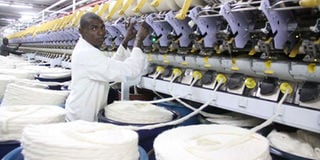
Last week, Mr Mohamed was out in Kwale County launching a cotton ginnery with the local governor. If we dot the map of Kenya with numerous ginneries, it will be a positive sign that cotton production is on the mend and that textile fabric industries will re-appear after the collapse of the industry in the 1980s. Only then can we reasonably talk of reducing use of imported secondhand clothes without fear of jeopardising our AGOA quotas.
Not a week passes without a county governor promising his electorate an agro-industry of one kind or another. These include a sweet potato products factory in Migori and a bamboo-based paper agro-forestry industry in the upper Rift Valley. Nyandarua has announced plans to make starch out of Irish potatoes, the coastal counties are planning to revive cashew nuts processing while Makueni has actualised processing of fruits into juices.
The above list is an indication of huge potential for county industrialisation, and this should prompt the ministry in charge of manufacturing to dedicate a team of techno-economists to assist the counties with feasibility studies that can turn these good county ideas into viable, sustainable, and above all bankable projects.
Done jointly with counties, feasibility studies should ascertain technical and economic soundness of these value addition proposals, while confirming existence of sufficient local and export markets. The studies can cast their nets wider to embrace neighbouring countries so as to create critical mass to strengthen the economies of scale by providing the widest possible capture of produce.
Ideally, county industries should be built by private capital with the counties primarily providing facilitation like infrastructure (roads, water, power) , identification of factory sites, and above all, extension services for the crop producers.
Further before trooping foreigners into county headquarters to sign MoUs for industrial investments, it is proper that independent feasibility studies are undertaken beforehand for transparency and to avoid future stalled projects either without feedstock or markets.
Further, we should not ignore the manufacturing potential that exists in the mining sector. I will single out Kitui County which five years ago was in the headlines in respect of potential commercialisation into cement of limestone deposits in Mutomo. In fact the renowned Nigerian industrialist, Aliko Dangote, did pay us a high-level visit, intending to establish a cement factory in Kitui using feedstock from Mutomo limestone and coal fuel from Mui Basin in the same county.
There was also unverified talk of large deposits of iron ore in the north-western parts of Kitui that could use the Mui basin coal to make steel. I say “unverified” because Kenya is yet to undertake the national minerals survey which was meant to locate and quantify existence of mineral reserves across Kenya.
Creating new industries has long lead times and this is why we should speed up implementation where genuine opportunities exist. On the minimum, it is proper that a catalogue of viable industries across Kenya is prepared with joint signatures from the counties, Ministry of Industrialisation, and any other ministry involved in production and resource development.
It is such project studies that the investment authorities and our foreign missions should be marketing to potential local and external investors.
Finally it is the industrialisation ministry that should initiate legislation, regulations and fiscal proposals to nurture and protect industries which are genuinely based on local produce. Ring-fencing such industries against unfair competition from imports would be justified if the industries demonstrate real direct and indirect socio-economic value addition to the local communities and the wider economy Yes opportunities for county industrialisation are many and ideas plenty. If the ministry work with counties to harmonise professional inputs, it will be time and effort well spent.
Unlock a world of exclusive content today!Unlock a world of exclusive content today!