Time flies with great content! Renew in to keep enjoying all our premium content.
Prime
LETTERS: What Kenya needs to be a successful oil state
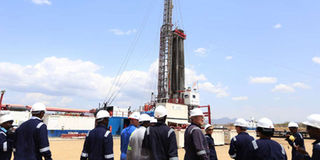
Successful oil-producing countries have been able to save, invest and diversity their economies. FILE PHOTO | NMG
In the oil and gas sector, there is a dichotomy between countries that have found oil and have been able to enhance development of their country and those that have been infected by the oil curse: the dreaded Dutch disease.
Successful oil-producing countries have been able to save, invest and diversity their economies. They have saved oil and gas resources in sovereign wealth funds and other areas to be invested for future generations.
By saving their funds in such a manner, they ensure that when the oil runs out, as oil is a finite resource, they will still be able to provide for their citizens. Examples of countries that have done so include Norway, whose Government Pension Fund is the largest in the world, worth over $1trillion and whose revenue comes from its North Sea Oil Drilling operation.
In addition, they do not only save, but invest their revenue for the future by focusing on areas that will such as infrastructure to lay the foundation for development in other sectors. Countries such as Ghana have invested in road infrastructure which is a stimulus to other sectors.
Diversification of the economy is another key consideration for oil-producing countries. Successful countries ensure that sectors other than the oil sector are supported and grown.
They use the oil revenue to develop other sectors to ensure there is balanced development and so that oil revenue does not lead to movement of workers to the oil industry. Ensuring teachers are well-paid is a strategy used to ensure they do not leave the classroom to go work in the better paying oil fields.
On the other hand, certain countries have been affected by the oil curse, the so-called Dutch disease. This refers to a situation where there is an increase in economic development in the oil sector of a country and a decline in other sectors.
Capital inflows
It occurs due to several factors including when the increased investment in the oil sector, leads to increased pay for workers in the sector as opposed to others, hence causing people to move from other sectors to work in the oil industry. It is also caused when there are increased capital inflows that lead to appreciation of a currency and hence makes the goods exported from the country more expensive for other countries to buy, making other sectors less lucrative and hence likely to struggle.
So what can be done in such a case? A 2011 study entitled, Direct Redistribution, Taxation, and Accountability in Oil-Rich Economies, suggests that some of the revenue received from oil should be transferred directly to citizens and then taxed by the government to finance its budget.
The direct transfer of revenue to citizens is a way of empowering citizens as they are able to decide on how to spend the cash according to their priorities. In addition, taxation of citizens is likely to lead to increased scrutiny of public spending as citizens will want to know how their taxes are spent. This in turn will lead implementation of programmes that benefit the public as a whole.
Equitable sharing of oil revenue that benefits communities from which oil is extracted and the country as a whole, create a feeling of inclusiveness among citizens. This in turn will lead to ownership and acceptance of oil production activities, which will help the nation avoid the oil-curse and Dutch disease and instead enable it to reap the benefits of being an oil producing country.
Ronald Ng’eno, communication specialist, Nairobi.
Unlock a world of exclusive content today!Unlock a world of exclusive content today!