Last year marked a shift in Kenya’s interest rate cycle, with loan rates easing and returns paid to depositors falling following nine successive cuts in the Central Bank Rate (CBR).
This contrasted sharply with 2024, when banks were forced to raise deposit returns to a 26-year high of 11.48 percent to lure savers away from government securities. In 2025, lower policy rates tilted the balance in favour of borrowers and banks, even as they squeezed returns for savers.
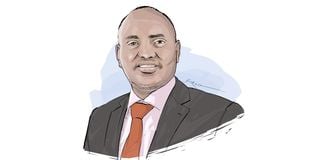
KCB Group chief executive Paul Russo spoke to the Business Daily about the changing interest rate environment, why lending rates have adjusted more slowly than deposit rates, what is needed to accelerate private sector credit growth, the implications of persistently high loan default levels for the banking sector, and what is in store this year.
The Central Bank of Kenya (CBK) has cut rates for nine consecutive meetings, but the general feeling for 2025 has been that banks have been out of step with monetary policy intentions when it comes to pricing loans. What is your assessment of this disconnect?
It is important to distinguish between the policy signal and the transmission mechanics. CBK has been clear in its monetary policy easing intent, and that has materially improved system liquidity and funding conditions.
Where the perception of a disconnect arises is that lending rates are not determined by the policy rate alone. They reflect credit risk, borrower cash-flow visibility, sectoral stress, legacy loan repricing, and general economic growth.
Over the last year, while inflation has moderated, risk in parts of the real economy has remained elevated, particularly among small and medium-sized enterprises (SMEs), households, and other exposed sectors such as hospitality and manufacturing.
Consequently, what we are seeing is not banks resisting monetary policy, but a cautious recalibration where the risk premium is coming down slowly in comparison to funding costs.
As confidence and asset quality improve, transmission will be more pronounced in the coming days. Further, the recently introduced Kenya Shilling Overnight Interbank Average (Kesonia) rate, which closely tracks the CBK policy rate, will help improve the monetary policy transmission.
The gap between deposit rates and lending rates widened in 2025, suggesting banks may be benefiting more from the current cycle of falling interest rates than customers are. How do you respond to concerns that banks are extracting more margin instead of passing on the gains?
Banks have, over time, been keen on passing the benefits of lower rates to the customers across the board. The widening spread needs to be viewed through a prudential lens.
Deposit rates have adjusted faster because liquidity has improved system-wide. However, it has to be noted that lending rates embed longer-term risk assumptions, capital costs, and provisioning expectations, among other considerations, and not only the cost of funds i.e., deposit rates.
Private sector credit growth is beginning to rebound [6.3 percent in November versus negative 2.9 percent in January 2025]. From your point of view, what does this signal for the banking industry and the economy in 2026?
The rebound from contraction to positive credit growth is an encouraging signal, but it needs to be interpreted carefully. It suggests that confidence is beginning to return and that monetary easing is gaining traction. However, the recovery is still uneven.
Growth has been stronger in top-tier corporates and well-secured lending, while SMEs and informal businesses remain under pressure.
Looking into 2026, the opportunity for the industry is to broaden the quality of credit growth, supporting productive sectors without compromising asset quality.
If fiscal flows improve and demand strengthens, this rebound can become more durable and more inclusive. Banks are looking to do what is right by broadening credit access whilst ensuring sustainability and quality.
Despite improved liquidity conditions, non-performing loan (NPL) ratios remain a concern across the sector. What structural or sector-specific pressures are keeping NPLs elevated, and what is the way out?
NPLs remain elevated not because liquidity is constrained, but because many of the drivers are structural rather than cyclical. In addition, recovery and resolution mechanisms remain slow. Insolvency processes take time, further protracted by legal tussles.
The way out is a combination of stronger economic growth, faster fiscal settlement, more efficient restructuring frameworks, and continued proactive engagement between banks and borrowers. Provisioning alone is not a solution; quick and effective resolution remains key.
There is an ongoing debate over higher capital requirements for banks, with some smaller lenders saying this could leave them with idle capital.
As a senior member of the Kenya Bankers Association (KBA), are there any active engagements with the CBK on tailoring these rules for smaller institutions?
This is an active and constructive conversation between KBA and the CBK. The regulator’s focus on resilience is understandable, particularly in an uncertain global operating environment.
Interest expenses eased in 2025, giving banks some breathing room on funding costs. How much room does that create for banks such as KCB to bring down loan prices as the new year begins?
Lower interest expenses have the potential to create room for repricing, and we are already seeing that from an operating perspective.
The pace and depth of further reductions will depend on how quickly credit risk normalises, how legacy loans roll off, and how the macro-economic environment evolves.
For a bank like KCB, the priority is to ensure that any reduction in loan prices is sustainable and aligned with borrower fundamentals.
If inflation remains anchored and stable, fiscal pressures ease, and asset quality improves, there is a clear pathway for lower lending rates in 2026, particularly for productive sectors and well-structured SME, and even the green lending arena.