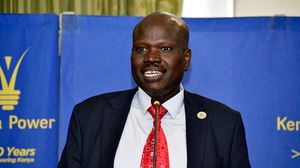
Kenya Power posted a net profit for the second successive year at Sh24.47 billion in the year ended June 2025, as the firm rides on a growing customer base, increased sales and improved system efficiency.
Joseph Siror, the firm’s CEO, talked to this publication about the year under review, plans ahead, Kenya’s growing reliance on neighbouring economies mainly Ethiopia to boost electricity supply among others.
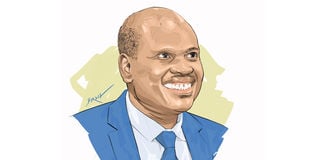
Kenya Power has now posted a net profit for the second-year running, a sharp contrast to years of losses before you took over. What is your word to other CEOs seeking to turn around the fortunes of their firms?
As a CEO, try to get as much understanding as possible of your institution. Identify the levers, challenges and areas that if you address, will turn around the company.
Once you have understood the institution, then you rally your troops and give them hope especially when in distress.
For CEOs without the technical background for the particular institution, let them get reliable men from the correct background to give them all the details they need before making that key decision.
Lastly, be committed to the cause of your company and do not try to influence processes like procurement. For example, I can proudly say that I have never done anything that is not in the interest of Kenya Power.
All my decisions which at times have not been very palatable, have always put the interest of the company first.
We have seen cases of the board of directors clashing with the senior management of State firms. How would you describe the situation at Kenya Power?
For any organisation to flourish, the relationship between the board, management and staff must be good. Many are the times that you find boards that are a bit dysfunctional, but this cannot be said of our board at Kenya Power.
We have been able to make these strides as the management because of the intentional and excellent relationship we have with our board of directors.
The revenues from electricity sales in the year ended June 2025 have dropped, compared to a year ago, yet the number of units that Kenya Power sold has gone up. What triggered the fall in revenues?
The fall in revenues has largely been due to the falling base tariff. If you look at the tariff control period since 2023, year on year, the tariff has reduced by almost Sh0.70. So, if you compare now and 2023, it has gone down by almost Sh2.
This means that if you were consuming 20 units in 2023 and the same number of units now, then it will have reduced by almost Sh20. This explains why even as we increased the sales, the revenue is lower. Our forex recoveries also dropped in the period, compared to last year.
The share of imported electricity in the national grid has significantly grown from a paltry 1 percent in 2021 to 10 percent as of June 2025. Does our growing reliance on our neighbours concern you?
It is a major concern, and this is not premised on the thinking that they (Ethiopia and Uganda) will be unable to support us.
Rather, my concern is that this is hydropower from these countries and in a situation, where there is serious drought- then they might be left in a position where they might be unable to meet this obligation.
The best situation is that as much as we are depending on our neighbours to boost our supply, there is a need for Kenya to have adequate reserves, so that when our neighbours are not able to help, then we will not be plunged into a crisis.
Lastly, there has been a notion that Kenyans felt there was too much power and this is a serious misnomer. Indeed, any day Lake Turkana generates little due to its intermittence nature, then we are forced to load shed some areas.
Kenya Power has for years been plagued by customer complaints due to frequent and extended blackouts. How is the situation now?
We invested about Sh29 billion to strengthen the network. Remember, one of the big challenges that our customers raised are outages.
We removed all trees off the traces of our network, repaired distribution lines, replaced insulators and worked on transformers that needed maintenance. All this investment is paying off now.
Remember that over 60 percent of localised outages are because of trees and that is why we invested heavily in clearing the traces along our network. We have strengthened the grid and reduced the outages. Where we are today is definitely not where we were a year ago. We have made strides.
The Western region has recently largely borne the brunt of forced load shedding especially during peak demand. How is the situation now?
We are getting better because of a number of interventions, like the Narok to Bomet 33 kilovolts (kV) line that is providing temporary relief. We also terminated one of the circuits from Olkaria at Lessos and there is now an alternate path from Lessos that goes direct to Muhoroni.
There is the new 75MVA (megavolt-amperes) transformer which is providing higher capacity for Lessos and the Sondu-Homabay-Awendo line.
We also increased import Uganda after completion of the new transmission line and now at peak we are getting up to 120 Megawatts. This has been key in boosting our supply to this region.
Kenya Power has decried the impact of vandalism of the grid. Is this vice still a major concern?
Vandalism of critical parts of our infrastructure like transformers is still a big problem and we are rallying everybody to help us fight this.
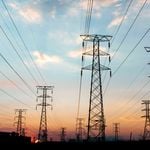
Remember, when vandalism on critical parts of the network triggers an outage, then we all suffer. We still think that the market for scrap metal in the region is big and as a result, this is fuelling vandalism of our network.
Is there a particular project that Kenya Power is undertaking and which you would describe as one that you are most passionate about?
Our most passionate project now is completing the Lodwar line which we are doing from Lokichar, this is a 66(kV) line. And for your information, Lodwar has never had the privilege of being on the grid. You can imagine how transformative this line will be to this area.
Am happy that we have pushed this project and our team of engineers is working hard to complete this line and bring our brothers and sisters in Lodwar to the grid.