Time flies with great content! Renew in to keep enjoying all our premium content.
Prime
500 petrol stations face ERC closure in safety crackdown
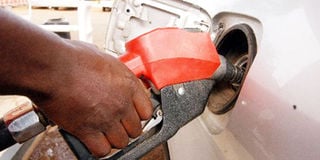
An attendant at a petrol station fills up a car tank: Most of the oil dealers have been found operating in breach of sector regulations. PHOTO | FILE
More than 500 petrol stations across the country are facing closure after they were found in breach of safety and quality standards set by the Energy Regulatory Commission (ERC).
The petrol stations have failed to meet the prescribed construction specifications and have irregularly incorporated additional businesses such as eateries, car wash sheds and offices in contravention of the regulator’s terms, according to ERC.
Edward Kinyua, the acting director of Petroleum at ERC, said that out of the 1,731 licensed petrol stations, more than 30 per cent that failed to meet the standards would face action from the regulator.
“All non-compliant stations will be served with improvement notices. Those that will not have complied by the end of the notice period will be served with closure orders,” Mr Kinyua said, adding that some stations face express closure as they cannot be salvaged.
The ERC, which licenses petrol stations, said the majority of the stations in violation of the standards were built before the law creating the market regulator was enacted in 2008.
The industry lobby, Petroleum Institute of East Africa, chairperson Wanjiku Manyara said its members had put in place internal mechanisms to ensure compliance with the set standards.
“PIEA promotes the principle of self-regulation and we do this by ensuring that we meet one of our core objectives, which is fostering high standards and practices in the oil industry in collaboration with stakeholders, government and regulatory agencies,” she said.
PIEA participated in the crafting of the subject standards and is the main channel through which legal and regulatory information is disseminated to members.
Extra facilities
The Kenya Bureau of Standards’ Petroleum facilities – Retail and Consumer outlets –specifications only allow tier two stations with land size of 1,500 metres squared and 24 metres from the front entry line to the back of the station (depth) to have extra facilities.
That size of land, which is known as a tier 2 station, can only host a car wash and lubrication bay, but is not allowed to host eating facilities.
The smallest petrol station, which is tier 1, should have land size of 500 metres squared with a frontage of at least 22 metres, including a six- metre entry road and another six-metre exit road and are not allowed to have extra facilities such as a car wash.
Stations with land sizes of at least 2,200 metres squared and a depth of 69 metres with maximum storage of 80,000 litres form Tier 3 outlets.
Such a station can have an office block which may contain a convenience store, eating facility, banking hall and a maximum of three floors of multilevel office block.
“In cases where there is a multilevel building, adequate provisions for emergency fire escape and minimisation of noise and air pollution inside the buildings must be made,” the guidelines say.
Only Tier 4 stations are allowed to have LPG storage tanks but with a limited storage capacity at 4.5 tonnes. The tanks must be underground. Here, no eating facility is allowed.
The regulations also prohibit the installation of petroleum dispensing pumps in places where crowding is likely to occur.
This particularly poses danger to many stations in Nairobi that are serving as public transport terminals with huge crowds during off peak hours.
Some stations are located near crowded market stalls while others are located near churches, increasing the risks in case of disasters.
Several tier one and two petrol stations also have eateries and other facilities involving heating such as bakeries and cafes attached to them or in their immediate premises with partnerships to host coffee shops as the new trend.
The violations are said to have been committed by the mainstream market leaders, including those running major international brands.
The ‘majors’, as they are known in the market, are said to have responded to the growing number of petrol stations by opening several outlets across the country, some of which are in violation of the standards, to ward off competition from the new local brands.
Mr Kinyua said the checks will continue until full compliance is realised and are expected to mainly affect Nairobi and Mombasa.
“We may give them between one and two months to rectify, but that depends on the level of non-compliance. Some of them are so bad you can just see their violations because of where they are located,” Mr Kinyua said.
Among those likely to be targeted are those located in residential areas and share fences with residential flats in places like Nairobi’s Outering road.
The stations are also under close scrutiny under the fuel integrity program checks those dealing in adulterated petrol and diesel for public listing every quarter.
Unlock a world of exclusive content today!Unlock a world of exclusive content today!