Accidents, car theft insurance payouts hit record Sh44bn

shutterstock_577056850

The sharp rise in claims outpaced the premiums collected, pushing many insurers to rely on investment income to sustain their operations.

Photo credit: Shutterstock

A surge in road accidents, vehicle repairs and car thefts handed motorists and victims a record Sh44.83 billion in insurance compensation in the year to December, raising fears premiums could rise.

The bill, which captures payouts for accidents, damages, and theft, marks a 37.1 percent rise from Sh32.7 billion a year earlier, continuing the trend that has seen general insurers go for years without underwriting profits from issuing covers to private and public vehicle owners.
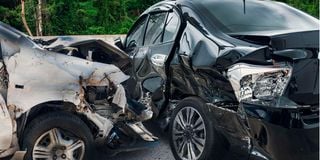
The jump in accidents and a surge of fraudulent claims are expected to raise insurance bills as insurers seek higher premiums to cover the losses.

The latest Insurance Regulatory Authority (IRA) analysis shows that own damage, which refers to coverage that protects policyholders' vehicles against losses from incidents such as accidents, theft, fire, or natural calamities, surged 42.4 percent to Sh15.97 billion, topping the motor vehicle claims chart.

The value of claims from accidental damage, which includes sudden or unforeseen harm to the covered vehicle due to events such as collision, more than doubled to Sh8.65 billion from Sh4.02 billion, as compensation from personal injuries grew 55.7 percent to Sh8.08 billion.

Payouts to those killed in car accidents rose 52.9 percent to Sh2.85 billion as the number of deaths qualifying for insurance payouts jumped 34.4 percent to 3,598 from 2,676.

The sharp rise in claims outpaced the premiums collected, pushing many insurers to rely on investment income to sustain their operations.

In the review period, the 37.1 percent rise in claims was against a 1.6 percent increase in premiums to Sh55.98 billion from Sh55.12 billion.

The performance points to the pressure facing underwriters to balance between affordability and profitability in this line of business that continues to absorb the highest share of claims.

Motor vehicle insurance business in Kenya has three classes: motor private for private vehicles, motor commercial for commercial vehicles excluding public service vehicles (PSVs) and motor commercial PSV that is exclusively for PSVs like matatus.

And with road usage on the rise, spare part costs surging, theft patterns evolving and fraud persisting, insurers are locked in a costly balancing act between protecting customers and protecting their own bottom lines.

As claims continue to surge and pile pressure on insurers, policyholders, too, are beginning to feel the ripple effects. Motor vehicle premiums are trending upwards as insurers price in higher risks, while some companies have quietly tightened underwriting standards to limit exposure.

In certain cases, insurers are refusing to cover older vehicles or models deemed prone to accidents and theft. The increased premiums and refusal to insure certain vehicles have, on several occasions, put insurers and customers at loggerheads.

The High Court in January this year dismissed a 2022 case in which the Kenya Human Rights Commission (KHRC) had sued insurers for increasing premiums for older vehicles. The judges said insurers operate in a free market and customers are free to pick an insurer of their choice.

The dismissal of the KHRC case, in which it had sued the IRA and the Association of Kenya Insurers (AKI), lifted the injunction that had stopped insurers from increasing prices on vehicles older than 12 years or valued at less than Sh600,000 by up to 50 percent and denying the motorists comprehensive cover.

The move offered relief to insurers, given that previous attempts by the IRA to set minimum prices had been rejected.

The Court of Appeal in September last year found the Motor Insurance Guidelines issued in 2009, in which the IRA was seeking to set the minimum premium at seven percent of the value of a vehicle against the then prevailing industry minimum of four percent, irrational.

Insurers have continued to innovate the handling of motor insurance, with some adopting telematics—vehicle in-built monitoring devices— to adjust premium rates based on policyholders’ mileage and driving habits.

Official data shows Kenya has witnessed a near doubling of registered motor cars in 10 years to 2023, with the number jumping to 1.39 million in 2023 from 779,256 in 2013. This has seen the demand for motor insurance continue to rise, partly because of the compulsory nature of third-party cover.

Private motor insurance returned an underwriting loss of Sh3.06 billion last year, a growth from Sh2.6 billion a year earlier. During the same period, underwriting losses from insuring commercial vehicles were Sh3.04 billion, being a slight improvement from Sh3.31 billion in the prior year.

Aside from deaths related to motor vehicles, IRA data shows personal injuries rose to 29,585 from 28,973, contributing to the 55.7 percent increase in claims towards medication for bodily harm or disability resulting from accidents involving the insured vehicles.

Accidental damage bill, which includes repair expenses, spare parts replacement and full write-offs in severe cases more than doubled on the back of the number of cases rising 2.4 times to 47,792 from 19,878.

Insurers got some breathing room on claims related to the theft of motor vehicles (as a stand-alone risk). The value of claims eased 52 percent to Sh700.4 million after cases of theft more than halved to 2,267 from 5,182.

Cases of property damage, which refer to loss or destruction caused by the insured vehicle to another person’s property — such as another car or building— hit Sh1.98 billion from Sh1.92 billion despite the cases dropping by a quarter to 6,857.

Kenya’s insurers view the two largest classes of general insurance—motor and medical— as the worst hit by fraud amid competition that has seen some underwriters underprice and end up struggling to honour claims.

Many insurers have been backing up price adjustments with digitised claims processing systems to weed out fraud, which continues to inflate claims.

Others have been demanding cashless fare payments to be able to tell if people making third-party claims were indeed in the vehicles under which they are seeking payments for accidents.

PAYE Tax Calculator

Note: The results are not exact but very close to the actual.