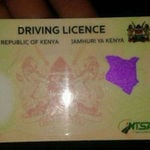
The National Transport and Safety Authority (NTSA) is on the spot over the slow uptake of smart driving licences (DLs), with 572,674 cards worth Sh176 million remaining unprinted years after delivery, risking loss of taxpayer funds.
Auditor-General Nancy Gathungu has revealed that as of June 2024, NTSA had only printed 1,637,930 smart DLs, despite the National Bank of Kenya (NBK), which was contracted to supply the cards, having delivered more than 4 million.

Smart cards use embedded chips similar to those in ATM cards, which degrade over time and lose validity. This means the unprinted smart DLs lying unused at NTSA could soon become obsolete.
Experts estimate that smart cards –printed or unprinted—typically expire within five to 10 years, which is why technologies like ATM cards and electronic IDs carry expiry periods in that range. The new generation cards, which expire after every three years, cost drivers Sh3,050.
“Review of the project status as at June 30, 2024 revealed that 1,637,930 or 33 percent of total contracted cards had been printed since inception, an indication of very low performance,” said Ms Gathungu in the audit report of NTSA’s books for the year to June 2024.
Audit reports are typically published with a time lag, and developments during the 2024/25 financial year may not yet be reflected. NTSA signed a Sh2 billion contract with NBK in 2017 to supply, install and maintain five million second-generation smart DLs, with an initial target of printing all cards within three years.
But seven years later, the authority has printed less than half that target, even though NBK has delivered nearly all the cards, some of which were returned and some now lie idle and risk expiry.
This implies that over 60 percent of the estimated five million registered drivers in Kenya are yet to receive the new generation licences, and may be driving without valid documents.
By June 2023, NTSA had printed 1,479,176 cards out of 4,042,050 delivered by the supplier, meaning it printed just 158,754 cards in the one year to June 2024.
According to the Auditor-General, the authority has since returned 1.75 million cards to NBK to reduce uninvoiced stock —c ards delivered but not used—in order to limit its liability to the supplier.
“The uptake for the cards is still slow and the management did not demonstrate efforts to improve the situation,” said Ms Gathungu. “In the circumstances, the value for money could not be confirmed.”