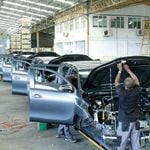
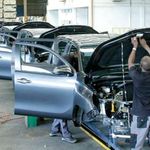
The number of locally-assembled vehicles grew by 16.4 percent during the first six months of this year compared to a similar period last year, disrupting a sustained falling trend observed since the first half of 2022.
This suggests a rebound in demand amid a stabilised shilling and falling lending rates.
Data from the Kenya National Bureau of Statistics (KNBS) shows that local assemblers churned out 6,723 units in the six months to June 2025, rising from 5,778 in a corresponding period last year.
In the first half of 2023, companies had rolled 6,682 vehicles from assembly lines, which marked a drop from the 7,450 units made in a similar half of 2022.
This year’s rebound is reflected in the sales volumes of new cars, which rose by 25.05 percent to 6,360 units during the first half compared to 5,086 in the same period last year.
Isuzu East Africa continues to tightening its grip with a market share expansion to 48.4 percent, up from 47.9 percent last year.
Analysis of data compiled by the Kenya Motor Industry Association (KMI) showed that the growth in sales during the review period was the fastest in four years.
Locally assembled vehicles, which are shipped in as completely-knocked-down units, make up the bulk of new vehicle purchases, accounting for more than 80 percent of sales.
This year’s improvement in new vehicles’ demand, which has driven assembly volumes, can be partly attributed to falling cost of loans characterised by relative stability in foreign exchange markets and inflation.
“The stable forex and inflation rates are driving optimism in the market. The storm appears to be over because of the positive macroeconomic indicators, with promising signs of recovery and growth,” Isuzu East Africa told the Business Daily earlier this year.
The share of domestically assembled vehicles has grown from less than half of sales in 2017 to the current levels, driven by several incentives aimed at boosting job opportunities for the growing number of skilled and semi-skilled unemployed youth.
Apart from Isuzu, other local assemblers include CFAO Mobility Kenya, Simba Corp, and the Thika-based Kenya Vehicles Manufacturers.
Since 2022, assemblers have endured a torrid operating environment, with the weakening value of the local currency against the US dollar and shortages of the country’s reserve currency being compounded by higher taxes in an economy battling the vagaries of high cost of living.