BAT doubles its interim dividend as earnings grow to Sh2.98 billion

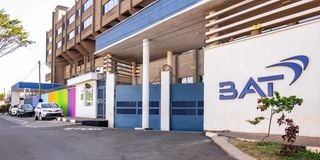
The British American Tobacco (BAT) Kenya Industrial Area plant in Nairobi. 

Photo credit: Pool

BAT Kenya has doubled its interim dividend to Sh10 per share for the first half of the year after reporting a 39.7 percent increase in net profit to Sh2.98 billion in the period on lower costs.

BAT will pay the dividend that totals Sh1 billion on September 26, to shareholders on its register at the close of business on August 29.
The company had paid an interim dividend of Sh5 per share in the corresponding period last year, before adding a final dividend of Sh45 per share at the close of the financial year in December 2024.

The company’s net revenue was little changed at Sh11.73 billion, compared to Sh11.72 billion in the first half of 2024. BAT attributed the flat earnings to a tough domestic market where constrained consumer purchasing power forced customers to lower priced cigarettes and reduced consumption.

It however cut its operating costs by 5.5 percent to Sh7.5 billion, partly benefitting from lower costs of imported inputs on account of the shilling’s trading at a lower exchange rate versus the dollar, compared to the first half of 2024.

“Total cost of operations declined by 6 percent, reflecting prudent cost management, reduced hard currency input costs on account of lower dollar/shilling exchange rates and the benefit of productivity savings initiatives,” said BAT in its financial statement for the half year period.

“Our export markets faced considerable headwinds, including adverse weather conditions, geopolitical tensions and currency devaluation. Despite these challenges, export sales volumes were marginally higher, reflecting the benefit of favourable geographical mix.”

The company also reported a finance income of Sh97 million, compared to a cost of Sh720 million last year, on account of the exchange rate movement.

Despite the higher profits, BAT said that its performance continued to suffer the negative impact of an influx of illicit cigarettes into the domestic market.

Citing unnamed third party research, the company said that illicit cigarettes accounted for 37 percent of the domestic market, ultimately denying the government Sh9 billion in tax revenue.

BAT attributed the surge in illicit products to the lower purchasing power of its customers, which forced them to seek lower priced alternatives to its products.

Further, the company disclosed that it resumed sale of its oral nicotine pouches in June, signalling that it has now secured the necessary sales licences for the products from the government.

BAT in 2019 introduced the pouches, then branded Lyft, as it sought to diversify away from combustible cigarettes. It however stopped selling them a year later, after the government said they ought to be regulated as a tobacco product.

Last year, the company sold the pouch making machinery at its Nairobi factory after lying idle for five years due to the marketing ban, saying that it would rely on imports once it got the nod to bring the pouches back to the market.

PAYE Tax Calculator

Note: The results are not exact but very close to the actual.