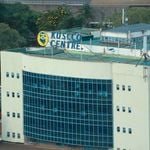
Savings and credit co-operative societies (saccos) have been spared mandatory write-off of billions of shillings locked in the Sh13.3 billion fraud at Kenya Union of Savings and Credit Co-operatives (Kuscco), putting them at odds with international accounting rules.
The High Court has quashed a guideline from the Sacco Societies Regulatory Authority (Sasra) that directed the co-operatives to set aside partial funds or provisions to cover the expected loss of billions of shillings worth of deposits and shares at Kuscco.

This was in line with the global accounting tenet, or the IFRS 9 accounting rules, which require lenders, such as saccos, to book expected losses on assets in one go.
However, the court determined that the Sasra guideline was rushed and had not undergone public participation.
The State had asked big saccos to make provisions on their Kuscco investments and lower their dividend payouts to protect their liquidity.
The court’s directive will ease fears of dividend freezes or cuts, which were seen as a blow to sacco members who have enjoyed annual payouts that ranged between 8.22 percent and 10.22 percent in the five years to 2023, including during the Covid-19 economic hardships.
“There is no proportional nexus between the objective and the rationality or justification whatsoever in the guideline that was advanced that was satisfactory to the court. The guideline is unreasonable, disproportionate and unconstitutional, whether or not there was a protest,” said the court.
“The court is of the view that a public participation process would have culminated in an inclusive, informed, acceptable and more effective eventuality. Such an open engagement would have created room to secure input from key instrumental players like statutory accounting organisations and the interested party.”
The judge said Sasra’s argument that in deed some saccos had already started provisions “cannot sanitise nor convert an illegality into a valid guideline.”
The decision came after Nyati Sacco Society petitioned the court to quash the Sasra directive, arguing that there were no legal reports to show Kuscco was insolvent.
It stands to lose Sh86 million invested in Kuscco as shares and deposits.
Nyati Sacco won the case on a technicality, with the court saying the regulator failed to give any reasons for the “rushed decision.”
Some top saccos have set aside partial funds or provisions to cover the expected loss of billions of shillings worth of deposits and shares at Kuscco.
Wrongdoings at Kuscco include the cooking of books, large-scale theft by executives, bribery, unexplained bank withdrawals and conflict of interest through issuance of contracts to firms owned by top managers and masking the schemes through manipulation of financial statements to report non-existent profits.
In the end, Sh13.3 billion has been lost, the umbrella body for saccos is insolvent to the tune of Sh12.5 billion and Sh8.8 billion it owes saccos as deposits and shares.
This violates the IFRS 9 accounting rules, which require the saccos to book expected losses on assets in one go.
The IFRS 9 rules, designed to respond to a central lesson arising from the global financial crisis of 2008, allow firms to predict and recognise financial losses earlier for stability. The firms are expected to provision for the expected losses upfront.
Some of the top saccos that have breached the rule include Nyati Sacco and Tembo Sacco.
Nyati Sacco has made a 10 percent provision against its Sh86 million investment in Kuscco.
It sued Sasra over the provisioning order, adding that the write-off will shield Kuscco and the regulator from their obligations.
Saccos that made full provisions include Stima (Sh108 million), Kimisitu (Sh353.95 million), LSK (Sh19 million), Mhasibu (Sh408 million), Sheria (Sh146.8 million), Balozi (Sh437.55 million) and Kenpipe (Sh149.18 million).
Saccos that were owed billions of shillings were advised to stagger the provisions over the coming years, while some have been directed to tap bank loans for the risk buffer.
The State has cast doubts about whether saccos will recover their investments in Kuscco, underlining the extent of fraudulent activities in the umbrella body.
The rot has left Kuscco with assets of Sh5.2 billion against liabilities of Sh17.7 billion, sinking it into Sh12.5 billion insolvency for an organisation that operated without a regulatory watchdog.
Sasra, in its defence, told the court IFRS 9 requires firms to make provisions “immediately upon realisation” that the short-term recoverability of their investment is doubtful and failing to do so would be in breach of the standard and also result in misleading accounts.
“Any failure to recognise the impairment of investments in Kuscco will automatically result in violation of section 40 (3) of the [Sacco Societies] Act as well as the IFRS 9,” said Sasra in the court papers.
“But more importantly, [it] will result in accounts and financial statements of sacco societies which do not reflect a true and fair state of their affairs contrary to section 40 (2) of the Act, with the resultant consequences of putting at risk of loss of members’ deposits and savings held in the sacco societies.”
The regulator told the court that provisioning would ensure saccos do not overstate their assets and income, which could trigger some to make excess payments out of their deposits or savings in anticipation of money that may never come.
“Making provisions does not stop the pursuit of the recovery of the impaired assets or investments, but it is a recognition that such pursuits may take a long time for any recoveries to be made and therefore provisioning to allow continuation of the business is necessary while preserving the existing asset portfolio,” said Sasra.
Nyati Sacco said its investment in Kuscco matured in April 2024, but the entity withheld payment “without giving any plausible explanation,” and this was not enough for a write-off.
Nyati Sacco CEO Julius Bett, in an affidavit, told the court that Sasra’s argument that Kuscco had been “reported to be facing financial challenges” lacked any authoritative basis and did not meet the threshold of a lawful administrative action.
A forensic audit by consultancy firm PricewaterhouseCoopers (PwC) revealed the cooking of books and theft.
The audit retrieved the trove of incriminating information from e-mails, computer logs, M-Pesa statements and documents of at least 23 top managers at Kuscco in a review that placed eight executives in the spotlight, including then managing director George Ototo, finance manager George Owino and chairman George Magutu.
The PwC audit unearthed the cooking of financial books to the tune of Sh9.3 billion following the understatement of costs like commissions and interest expenses and the overstating of incomes—a scheme which saw Kuscco book phantom profits.
The audit shows that between 2018 and 2023, Sh206 million may have been stolen through withdrawals from the Kuscco Sacco savings bank account in the name of replenishing cash at Kuscco Fosa branches. Records unearthed by PwC indicated false entries of commissions of up to 3.0 percent. As a result, the executives withdrew Sh1.6 billion, but paid out Sh1.1 billion.
Unlock a world of exclusive content today!Unlock a world of exclusive content today!