Time flies with great content! Renew in to keep enjoying all our premium content.
Prime
EAC shelves plan to pool and share custom taxes
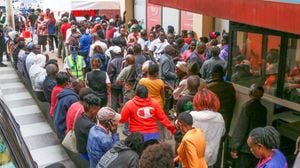
Last year, the tax man collected Sh201.3 billion from customs or 36 per cent of the entire taxes of Sh545 billion. Photo/FILE
The East African Community has allowed governments to run their custom services individually, ending weeks of uncertainty over the possible impact of the planned common tax collection on members’ revenue targets.
The formation of the common market on July 1 had provided for a common revenue team to collect custom taxes from the entry points such as sea and airports and sharing it out among the five member states.
The idea was to abolish the collection of tax at internal borders to ease the flow of goods in the regional market.
But Kenya opposed the move, arguing that the revenue sharing formula would benefit landlocked Uganda, Rwanda and Burundi and hurt it tax targets.
On Wednesday, the EAC secretariat made a U-turn and allowed the national tax collection bodies such as the Kenya Revenue Authority (KRA) to maintain the right to collect custom revenues.
“The plan to set up a common body was well-founded but it faced the dilemma of how to collect other charges like VAT, excise duty and other levies which fall outside our jurisdiction but are currently handled by national revenue bodies,” said Mr Peter Kiguta, the EAC Commissioner General in charge of trade and custom.
He said the proposal to collect and pool custom revenue was shelved after a study showed there would be institutional vacuums if the inner borders were removed.
In Kenya, for instance, the KRA also collects fees levied by different parastatals such as the Kenya Bureau of Standards (KEBs), the Roads Board and Kephis such as inspection fees and toll charges.
For KRA, custom taxes is critical in ensuring that it meets its targets because it accounts for nearly 40 per cent of Kenya’s revenue collection.
Last year, the tax man collected Sh201.3 billion from customs or 36 per cent of the entire taxes of Sh545 billion.
This comes at a time when Kenya is relying heavily on KRA to fund a huge portion of its nearly one trillion shilling budget this financial year.
In an ideal situation, partner states are supposed to dismantle internal borders in a common market to allow free movement of goods, services and other factors of production.
This would necessitate the creation of a common revenue body to act as a clearing house, pooling the collected taxes and sharing it out among the partners.
The regional body would mainly concentrate its operations at various external border points or key facilities like sea ports and international airports that goods and services from external parties use to enter the region.
The national revenue bodies, led by Kenya where custom revenue usually constitute close to 40 per cent of overall revenue collected, have strongly resisted the proposals to pool custom taxes and share it with neighbours.
The national bodies have also been slow interlinking their information systems, making the concept largely untenable
The EAC Customs Management Act states that only the country where the imported service or goods are finally consumed has the mandate to collect the import duty.
Under the new IT-aided system that the Secretariat has chosen, all revenue bodies in the region will be connected to common entry like seaports and airports to monitor movement of imports and visitors that come into the region.
The role of the internal borders will only be limited to verifying the specifications declared earlier and relaying the information to revenue authorities involved.
“In the absence of a common revenue body, revenue sharing would mean Uganda, for instance, will refund Kenya for the import duty if imports to Kampala that were released at Mombasa port disappear along the way, having been diverted before crossing the national border,” said Mr Kiguta
Unlock a world of exclusive content today!Unlock a world of exclusive content today!