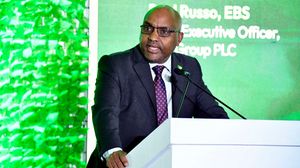
Equity Group Holdings has reported a 32.6 percent growth in net profit for the first nine months ended September 2025, riding on cheaper cost of deposits while holding other operating expenses flat.
The regional lender, with operations in six countries, Kenya, Rwanda, Uganda, Tanzania, South Sudan, and the Democratic Republic of Congo, reported a net profit of Sh52.1 billion for the period ended September, up from Sh39.2 billion in a similar period the previous year.

The growth followed a 20.6 percent drop or Sh9.3 billion in the bank’s cost of funds to Sh35.9 billion from Sh45.3 billion. The drop was despite a 2.2 percent growth in customer deposits, signalling the decline was due to a drop in interest rates.
“As interest rates came down late, we passed that to the customers and reduced lending rates by 300 basis points. Interest income has grown by three percent. But interest expense has gone down by 20.6 percent, giving us a 16 percent growth in net interest margin from Sh80 billion to Sh93 billion,” said Equity Group Chief Executive James Mwangi.
Banks traditionally make money by accepting cash deposits from their customers in return for interest payments and then investing that money elsewhere. The profit made by a bank is the difference between the interest it pays its depositors and the yield it makes through investing.
Equity held its operating expenses flat at Sh90.7 billion, which the management attributed to efficiency arising from digital banking.
“It is the efficiency of automation - we have digitised the bank significantly. The second one is the use of artificial intelligence (AI). For the last four years, the bank had been messed up by fraud. Financial losses from fraud have been eliminated by using AI,” said Mr Mwangi.
Kenya was the largest contributor to the group’s performance, having posted a 51.2 percent growth in after-tax profit despite a shrinking of its balance sheet.
The Kenyan subsidiary recorded a net profit of Sh31 billion, up from Sh20.5 billion. Its balance sheet shrank by Sh7 billion to Sh978 billion due to a decline in lending.
“When the government decided to lower its rates from 17 percent to the current range of 10 to 12 percent, the cost of funds went down, and the net interest margin has driven Kenya. The cost-income ratio of Kenya has moved from 57 percent to 47 percent,” said Mr Mwangi.
“What does it mean? That as at December, for every 100 shillings of revenue Kenya made, 57 was spent, but now it is only spending 47 and keeping 53.”
Equity’s DRC subsidiary raked in Sh13.8 billion in after-tax profit, Uganda (Sh2.9 billion), Rwanda (Sh4 billion), and Tanzania (Sh1.5 billion).
The bank’s pile of non-performing loans dropped by Sh10 billion in the three months from June to Sh129 billion, which management attributed to debt collections, especially in Uganda and Tanzania. Bad loans in Kenya were 18.2 percent of the total loan book, the bulk of which was held by corporate borrowers.
Besides banking, Equity also has subsidiaries in insurance, investment banking, telecom, and fintech. The non-banking operations raked in the group Sh800 million.
The bank’s performance saw its share price at the Nairobi Securities Exchange rise 5 percent in Thursday’s trading to a historic high of Sh63.50 per unit.
The hike in share price saw the bank's valuation at the bourse rise by Sh10 billion on Thursday, cementing the bank’s position as the largest listed lender by market capitalization at Sh239 billion.