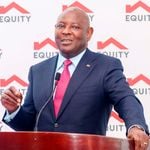
Equity Group Holdings has reported a 16.7 percent growth in profit after tax for the half-year period ended June 30, 2025, riding on cheaper deposits, with the listed lender stating plans to grow its loan book despite the tough economic environment.
The lender with operations in Kenya, Rwanda, Uganda, Tanzania, South Sudan, and the Democratic Republic of Congo (DRC) reported a profit of Sh33.3 billion, up from Sh28.5 billion posted in June 2024.
The profit jump followed management's decision to cut interest expenses by rejecting expensive deposits and paying off some of its loans. This saw the group’s interest expense decline by 18 per cent to Sh24.9 billion from Sh30.4 billion the previous year.
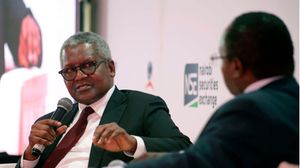
“The reason why we slowed in balance sheet growth is that we said we would not take deposits at just any rate; we made our borrowing possible when we reduced our deposit rates. Yes, we lost about Sh70 billion of deposits, but we said - it’s meaningful,” said Equity Group chief executive James Mwangi during an investor briefing.
Banks make money by accepting cash deposits from their customers in return for interest payments and then investing that money elsewhere. The bank's profit is the difference between the interest it pays its depositors and the yield it makes through investing.
Customer deposits were Sh1.31 trillion as at the end of June, a drop from Sh1.39 trillion at the beginning of the year.
The group's loan book expanded to Sh825 billion at the end of June from Sh804 billion in March 2025, with the lender declaring plans to reduce investment in government securities and lend more to the private sector.
“Banking is intermediation. It is not just collecting money and giving it to the government- it’s really taking the risk of intermediation, and we have developed the capability to lend in difficult times,” said Mr Mwangi.
The group’s non-performing loans stood at Sh139.3 billion with management banking on recent court rulings to help resolve some of the default corporate accounts and improve the quality of its book.
The group also reduced its cost of funds by paying off its loans, the bulk of which were sourced from development financial institutions. Borrowed funds stood at Sh67.5 billion, down from Sh103.3 billion a year earlier, which saw its cost drop to Sh699 million from Sh3.2 billion in June of 2024.
The group’s staff costs rose 10 percent at a time when it was conducting an ethical audit of its employees, which has seen hundreds fired. The fired employees were offered their salaries till the last day of work, pay in lieu of outstanding leave days, and pay in lieu of one month’s notice, less any dues owed to the bank.
Kenyan operation was the key driver of the profit growth, 40 percent, riding on non-interest income. The Kenyan unit recorded a net profit of Sh19.4 billion, up from Sh13.9 billion, which constituted 58.5 percent of the group’s bottom line.
Equity’s DRC subsidiary raked in Sh9.1 billion in after-tax profit, Rwanda (Sh2.6 billion), Uganda (Sh1.9 billion), and Tanzania (Sh1.1 billion). War-torn South Sudan posted losses of Sh100 million, with management saying the unit was not operational but on maintenance of license mode, forcing it to book for inflation.
Besides banking, Equity also has subsidiaries in insurance, investment banking, telecom, and fintech. The non-banking operations raked in the group Sh1.1 billion, with insurance being the key driver.
The insurance operations earned the group Sh932 million in profit before tax, with life business, which started operations three years ago, being the key driver. General Insurance started operations in January, while the group got its health insurance licence in June this year.