Family Bank has inked a Sh2.6 billion ($20 million) deal with the UK government’s development finance institution, British International Investment (BII), to support trade financing for micro, small, and medium-sized enterprises (MSMEs) across Kenya.
The partnership, which aims to bolster trade financing in the country, will channel the funds towards MSMEs, with at least 50 percent of the financing earmarked for women-led businesses and agribusiness-related enterprises, including those engaged in agricultural production, processing, logistics, infrastructure, and broader value chain activities.

“SMEs in Kenya continue to grapple with foreign currency liquidity constraints, which hamper their ability to access affordable financing and transact seamlessly. With SMEs forming over 80 per cent of our customer base, it is crucial for us to roll out innovative, friendly, and cost-effective ways of doing business,” said Family Bank CEO Nancy Njau.
The facility is part of the G7’s 2018 ‘2X Challenge’ – an initiative by development and multilateral finance institutions to invest in women around the world.
“This partnership not only supports our five-year strategy to scale SME lending and deepen market segmentation but also accelerates our ambition to bridge financing gaps for vital businesses, particularly those led by women and those in the trade and agriculture sectors,” Ms Njau added.
A recent national survey by the Central Bank of Kenya (CBK) indicates that SMEs constitute about 98 percent of all businesses in Kenya, create 30 percent of jobs annually, and contribute 3 percent of the GDP.
“In Kenya, MSMEs make up 98 per cent of all businesses and are vital for youth, women, and vulnerable groups’ employment. Our partnership with Family Bank enables us to support these small businesses – particularly agri-focused and women-led ones – with essential trade and working capital finance,” said Seema Dhanani, Regional Director, East Africa and Head of Office, Kenya at BII.
“This is aligned with our support for Kenya’s goal of building a vibrant MSME sector that drives economic and social transformation,” she added.
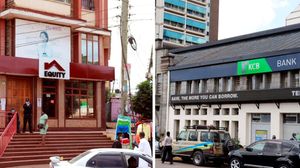
BII has also provided funding to other lenders in Kenya, including KCB and Standard Chartered Bank, this year. Stanchart and KCB Bank Kenya each received $100 million (Sh12.9 billion) from the development finance institution and impact investor for onward lending to women entrepreneurs and SMEs.
Overall, access to financing remains a major hurdle for MSMEs in Kenya, partly due to lenders' reluctance or high interest rates. For instance, CBK data shows that Kenyan banks earned an additional Sh12.7 billion from lending to MSMEs in 2024 compared to 2022 – driven largely by rising interest rates, which increased the cost of loan servicing for small businesses.