Time flies with great content! Renew in to keep enjoying all our premium content.
Prime
Helb website crash locks out public varsity loan seekers
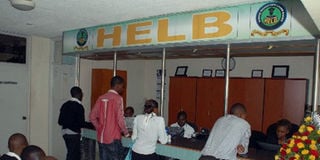
Higher Education Loans Board service hall at Anniversary Towers in Nairobi. The agency’s website crashed last slowing down processing of student loans. FILE
The Higher Education Loans Board (Helb) website has crashed since last month, locking out nearly 30,000 students currently joining public universities from seeking funding.
The students are required to apply for the education loan online after Helb discontinued the manual application in 2010.
The system failure has seen the bulk of the freshmen fail to receive funding for fees and accommodation as the board struggles to support the large number of applications it had received since the government adopted the double intake policy in 2011.
“The Higher Education Loans Board acknowledges the challenges currently being experienced by students seeking to apply for loans online via our web site www.helb.co.ke,” said chief executive Charles Ringera in an interview with the Business Daily.
“We are rapidly working on an emergency solution to this challenge and we urge all our clients to bear with us,” he added without giving timelines.
The website crash has seen Helb extend the deadline for submission of loan applications for the second time in a month to October 31. The earlier cut-off date was August 31 before it was moved to September 15.
Last month, Helb said that only 1,000 students had successfully applied for loans, reflecting the weight of the financier’s website meltdown.
Failure to get Helb support means thousands of students, who are fully dependent on government loans, will stay out of campus longer before they can join their self-financing counterparts in the lecture halls.
The majority of applicants for Helb loans are needy students who depend on the money to buy food, stationery and pay rent during their stay on campus.
The freshmen are expected to pay about Sh30, 000 for the year for tuition besides medical, registration, activity and computer laboratory fees.
Undergraduate students each receive between Sh35,000 and Sh60,000 loan annually from Helb alongside a bursary of up to Sh8,000. This translates to a minimum of Sh140,000 and maximum of Sh240,000 for a four-year course.
The public universities admitted 53,010 students and Helb was expected to fund about 32,000 of them.
Some universities like Karatina and Kenyatta have already enrolled their batch while Moi and University of Nairobi will register their lot next month and in January respectively.
“I have been sourcing upkeep money from relatives. I’ve been trying to open the website at midnight and early mornings since mid-August,” said Virginia Wanjiku, a first year student who reported at Kenyatta University on September 2.
For Bevin Moraa, who joined Karatina University on August 26, she has for the past month tried with little success to access the Helb website.
“I have only paid half my fees and I’m worried that I’ll not be able to sit my exams if I don’t get the loan,” said Ms Moraa.
Godfrey Odhiambo is scheduled to report on October 28 at Moi University, but is fretful he will be denied registration for lack of fees.
“I’ve still not been able to open the website. I am banking on the Helb loan for tuition and hostel fees as well as pocket money,” said Mr Odhiambo.
The majority of continuing students have not been affected by the website crash since their applications were due in July 31, before the website crash.
The technical hitch adds to Helb’s financing woes because the Treasury has not allocated funds to the agency in tandem with the growth of university admissions, leaving many poor students without state financing.
National Treasury secretary Henry Rotich allocated Helb Sh4.9 billion in this year’s Budget. Helb’s annual recoveries from past students stand at about 2.5 billion, pushing its total funds to Sh7.4 billion against a demand of Sh14.4 billion.
Unlock a world of exclusive content today!Unlock a world of exclusive content today!