Time flies with great content! Renew in to keep enjoying all our premium content.
Prime
How non-existent firm is set for Sh10bn Kenya pay
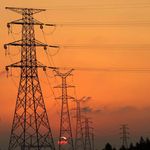
A pylon at the Suswa substation in Narok. Ketraco was in 2022 ordered to pay Spanish firm Instalaciones Inabensa for breach of contract for building a high-voltage transmission line and substations.
A Supreme Court award of Sh10 billion for a botched electricity contract is being claimed by three Spanish firms, including one that has been declared bankrupt and dissolved, putting Kenya at risk of paying three times that amount, or Sh30 billion.
The apex court in October 2022 ordered Kenya Electricity Transmission Company (Ketraco) to pay Spanish firm Instalaciones Inabensa €37.6 million for breach of contract after cancelling a deal for building a high-voltage transmission line and substations.
However, unknown to the Kenyan lawyers and judges, Inabensa was fighting for its life in the Spanish capital, in a struggle that saw it declared bankrupt a month after the Supreme Court verdict.
In the end, Inabensa was reported dissolved, and some of its assets were tipped for sale to a firm called Cox Energy, with Ernst and Young tapped as the insolvency administrator, said a confidential brief from the Attorney-General’s office.
Court documents show that on July 28, 2023, Inabensa transferred its rights to another Spanish firm, C.A. Infraestructuras T & I SLU, which is also pursuing payment in the decade-long dispute.
Payment risk
Now, the Attorney-General reckons that Ketraco is at a loss on whom to pay the Sh10 billion, with the State law office warning that Kenya could end up paying Sh30 billion to three firms.
In Kenya, Inabensa has frozen part of Ketraco’s billions of shillings in 17 bank accounts in NCBA, Standard Chartered Kenya, Co-operative Bank of Kenya, Citibank N.A. Kenya, and KCB Bank Kenya.
Separately, Infraestructuras T & I SLU is seeking to wind up Ketraco over non-payment of the Sh10 billion award following the Supreme Court verdict.
The Attorney-General has added a fresh twist to the spat after telling the court that the insolvency administrator in Spain, Ernst and Young Abogados, could still assert rights over the money on behalf of creditors.
This echoed a confidential brief that the Attorney-General prepared for Ketraco to help in the court proceedings where both Infraestructuras T & I SLU and Inabensa are seeking the Sh10 billion.
“The company (Inabensa) was declared dissolved, its directors ceased to hold office and were replaced by the insolvency directors,” said a brief from the Solicitor-General, Shadrack Mose, seen by the Business Daily.
“Noting that the directors of the company [Inabensa] ceased to hold office and were replaced by an insolvency administrator… the insolvency administrator acquires the stature of a foreign representative,” added the brief, while questioning the competence of Inabensa to enter into settlement talks with Ketraco.
The dispute has its origin in two engineering, procurement, and construction contracts awarded in April 2013 for the 400kV Lessos–Tororo transmission line and the extension of the Lessos substation.
Project dispute
The projects were valued at over €24.5 million (Sh3.6 billion) and Sh893 million, totalling more than Sh4.5 billion.
The claim for the botched contract has grown to Sh10 billion.
They were meant to facilitate electricity trade between Kenya and neighbouring countries, but were terminated in 2016 following a fallout between Ketraco and Inabensa.
Ketraco terminated the contract on April 25, 2016 after it received a notice from the Spanish firm on April 12, 2016, that it was suspending works after the State agency failed to settle several invoices.
At the centre of the ongoing dispute is a 2019 arbitral award in favour of Spanish contractor Instalaciones Inabensa S.A., which was contracted in 2013 to build the Lessos–Tororo transmission line and extend the Lessos substation.
The tribunal found Ketraco breached the contract by failing to pay invoices and unlawfully terminating the agreement, awarding the contractor more than €30.8 million (Sh4.6 billion) plus interest and costs.
That award was adopted as a judgment of the High Court in 2021, making the debt final and enforceable.
But the amount has since ballooned to over €62.6 million (about Sh10 billion), including interest and costs.
Ketraco attempted to overturn the arbitral award through a series of legal challenges in the High Court, the Court of Appeal and later the Supreme Court, but all attempts failed, leaving it exposed to enforcement proceedings.
Following the failed appeals, Inabensa obtained garnishee orders from the court against Ketraco’s bank accounts and began execution proceedings to recover the award.
The dispute has now split into two competing claims.
On one hand is Instalaciones Inabensa, the original contractor seeking to recover the debt through garnishee proceedings.
On the other hand is CA Infraestructuras T&I SLU, which claims to have taken over the rights to the award and is now pursuing liquidation of Ketraco – creating confusion over who the utility should legally pay.
Legal dilemma
Court filings show the insolvency petition was presented in May 2024 and is scheduled for a hearing in July 2026, placing the State corporation at risk of liquidation.
This has created a legal dilemma over who is entitled to payment.
Government lawyers warn that under Kenya’s Insolvency Act, foreign insolvency proceedings must first be recognised by Kenyan courts before any enforcement.
“Until such recognition… neither Inabensa nor its legal agent has the capacity to engage Ketraco,” the advisory states.
The uncertainty exposes Ketraco to the risk of paying the same debt more than once.
If it pays the Spanish assignee, Infraestructuras, it could still face claims from the insolvency administrator acting on behalf of Inabensa’s creditors.
If it pays the administrator, it could trigger further litigation from Infraestructuras.
This risk has already been flagged in court proceedings, where Ketraco warned that paying one party could result in “further legal proceedings being instituted” by another claimant.
“Since the first respondent is under liquidation, it cannot be said to be a credit-worthy going concern capable of refunding the sums,” Ketraco’s lawyers argued, warning that enforcement threatens its operations.
The Court of Appeal proceedings also reveal the scale of financial pressure facing the utility.
Ketraco said freezing its accounts had crippled its ability to operate, pay staff and sustain electricity transmission nationwide.
“The magnitude of the award… far outstrips the applicant’s financial capacity… and will bring its activities to an abrupt halt,” the company said.