How TotalEnergies’ missteps led to Sh139m payout after fuel station collapse

A TotalEnergies fuel station in Hurligham. 

Photo credit: Francis Nderitu | Nation Media Group

Oil marketer Total Kenya Limited, which has since rebranded to TotalEnergies Marketing Kenya, has been ordered to compensate a businessman whose franchised fuel station collapsed in 2010 due to a series of managerial lapses by the French firm.

In a significant victory for small-scale petroleum dealers against corporate giants, the High Court found Total Kenya liable for multiple contractual violations, including persistent fuel supply failures, neglected equipment and systemic mismanagement.
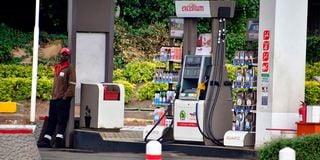
These breaches crippled David Njane’s Total-branded service station in Nairobi’s Hurlingham area, even though the oil marketer collected monthly royalties and maintenance fees from the outlet, known as Twin Service Station.

“Both equity and law will frown upon a party in a commercial transaction who derives a benefit from another out of its representation and while on its part it intends to unjustly enrich itself without paying,” the court remarked.

The case stemmed from a July 2007 agreement, whereby Total Kenya appointed Mr Njane as a dealer at its Hurlingham outlet.

Under the terms of the agreement, Mr Njane was required to pay monthly royalties of Sh950,000 and maintain minimum stock levels of 250,000 litres of petrol, 90,000 litres of diesel, and 10,000 litres of kerosene, while purchasing products exclusively from Total. 

The judgment shows that he was also not at liberty to engage independent technicians or service providers to maintain the equipment.

Total, for its part, integrated the fuel station into its systems, provided branded materials and equipment, received payments including maintenance levies, and issued operational directives.

Litany of breaches

However, Mr Njane accused Total of repeated supply shortages, unilateral price reductions, delayed Bon Voyage card reimbursements, and failing to maintain equipment, despite deducting Sh0.23 per litre as maintenance fees. 

He also alleged systemic fraud due to Total’s insecure Kenserve point-of-sale system, which he claims allowed staff to manipulate sales data.

The businessman claimed that the closure of the station was due to contract breaches relating to the supply fuel, maintenance of equipment, and the safeguarding system access and credit card payments.

He argued that he had been unable to enter into any similar distributorship due to a lack of capital and a new guarantor.

The court dismissed Total’s argument that no binding contract existed, noting that both parties had operated under the agreement for over two years.

The court also found that Total had failed to meet minimum supply quotas, resulting in stockouts and lost sales. For this, the court awarded Mr Njane Sh18.7 million.

He was also awarded Sh52.1 million for equipment downtime. Despite collecting maintenance fees, the court found that Total neglected repairs, resulting in frequent breakdowns.

Other awards included Sh2.3 million for losses due to faulty calibrated fuel tankers and short landing, Sh4.6 million for losses due to manipulation of the computer system that allegedly enabled fraud, and Sh61.4 million for the collapse of his business. Overall, the oil marketer will pay Mr Njane about Sh139.1 million.

Denials and blaming

Though two witnesses testified for Total Kenya that the system was secure and not susceptible to manipulation, the court noted that they could not explain how the lowest cadre of users of the system, the cashiers, could manipulate the data, prices, and stocks and inflict huge losses on the business.

Total Kenya denied liability, blaming Mr Njane for bounced cheques and mismanagement. 

The oil marketer also denied responsibility for price losses or maintenance failures, stating that any equipment issues arose from the businessman’s negligent handling, for which the company was not liable. 

Total also denied any negligence regarding the computer system, stating that the trader-controlled passwords and was responsible for staff conduct. 

Total Kenya denied the allegation of data manipulation or failure to credit Bon Voyage card sales, and that shortages on delivery were subject to a laid-down complaint procedure, which the businessman failed to follow. 

However, the court found no evidence linking payment defaults to supply cuts and noted that the businessman had provided a Sh3.5 million bank guarantee as security.

Mr Njane also produced emails and correspondence highlighting numerous complaints to Total Kenya about the shortages. 

A comprehensive financial report prepared by an accountant was produced, detailing losses attributed to the failure of Total Kenya to supply the agreed minimum quantities.

PAYE Tax Calculator

Note: The results are not exact but very close to the actual.