Inside the battle to end Joho’s port monopoly

Cabinet Secretary for Mining and Blue Economy Hassan Ali Joho.

Photo credit: File | Nation Media Group

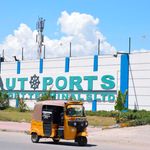
The family of Mining Cabinet Secretary Hassan Joho has suffered a double blow after the High Court accepted a petition challenging their dominance of the business of handing South Sudan’s cargo through the Mombasa port.

Justice Peter Mulwa gave the green light to a rival firm, Compact Freight, to seek enforcement of a directive by the South Sudan government that its cargo be handled by five firms, instead of two, including Autoport Freight Terminals, which is associated with the Joho family.

The Kenyan government has been accused of going mute on South Sudan’s order to cut Autoport’s handling of their business from 80 percent of the cargo to 20 percent, which would deny the Joho family billions of shillings in annual revenues if effected.

The judge asked the Kenya Ports Authority (KPA) to temporarily allocate cargo based on the wishes of the South Sudan government pending further directions from the court.

The challenge comes after the Supreme Court separately denied the Joho family the chance to build a second Sh6.4 billion grain bulk handling facility via their firm’s Portside Freight Terminals.

The Portside deal could have ended the 25-year monopoly that Mombasa tycoon Jaffer Mohamed has enjoyed in handling bulk grains,

generating outsized revenues over the period.

It was expected to deepen the battle for new money under the Joho family and the old wealth under Jaffer, in control of the lucrative logistics business at the port of Mombasa.

But the Supreme Court on June 30 stopped Portside’s bid on tender irregularities and the speed at which the firm was allowed to build a second grain bulk handling facility through a special procurement.

Now, the High Court has allowed Compact Freight to challenge the Johos’ dominance of the South Sudan’s cargo handling, dealing a blow to the family’s quest to dominate the logistics business at the Mombasa port.

It has also temporarily allowed the cargo sharing formula provided by the South Sudan government pending conclusion of the suit, cutting Autoport’s cargo handling share to 20 percent.

"The grant of leave does operate as a stay of any allocations of cargo handling ratios by the Cabinet Secretary for Transport and KPA that is or are contrary to the request contained in the letter from the Government of South Sudan dated June 16, 2025 addressed to the Cabinet for Transport pending further directions on July 21, 2025," said Justice Mulwa.

Juba in the June 16 notice sought more firms, including Compact, Compact FTZ, Precision Container, and LPC Global, to be allowed to handle its goods in Kenya as it seeks to cut Autoport Freight’s dominance.

It reckons that the shift will ensure a smooth flow of goods and stabilise the cost of consumer products in South Sudan.

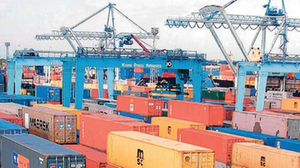
The port of Mombasa, the biggest in East Africa and the region's trade gateway, handles imports of fuel and consumer goods as well as exports of tea and coffee for landlocked neighbours such as Uganda and South Sudan.

“We hereby formally notify your esteemed office of our decision to cancel the previous cargo allocation…which had assigned 80 percent of South Sudan seaborne cargo to Autoport and 20 percent to Compact Freight,” said Akol Ajawin, the South Sudan Transport Minister, in the June 16 letter to his Kenyan counterpart, Davis Chirchir.

“This has led to bottlenecks and a notable cargo auctioning incident, adversely affecting commercial and sensitive consignments - including United Nations shipments.”

South Sudan wants the cargo to be shared among five firms, with Autoport handling 20 percent of the cargo, Compact Freight 30 percent, Compact FTZ 20 percent, Precision Container 10 percent, and LPC Global (20 percent).

Compact Freight sued the Kenyan government for failing to implement the South Sudan order cutting Autoport’s stake and increasing its share to 30 percent.

“The respondents (KPA and Transport ministry) have refused, neglected or otherwise failed to discharge their statutory duties about the lawful and proper implantation of the official wishes of the Government of South Sudan insofar as they affect the rights and interests of Compact Freight,” said Compact Freight.

Autoport has enjoyed a near monopoly over the business and was at one time a target of the government over alleged tax evasion.

It won the South Sudan contract on the strength of its deal with Kenya Railways that offered it a terminal at the Nairobi Inland Container Depot, which is connected to the standard gauge railway (SGR) and allowed the easy evacuation of cargo from the Mombasa port.

The man behind the firm is the former governor’s elder brother, Abu Joho. The South Sudan deal was thrust into the spotlight after President William Ruto won the presidency in the August 22 election against his challenger, Raila Odinga.

Mr Joho supported veteran opposition politician, Mr Odinga, in the August 9 election, and the outcome of the presidential election contest fuelled fears that the new administration would be inclined to review the rail terminal deal.

In July last year, President Ruto nominated key allies of Mr Odinga to his Cabinet, including Mr Joho, in a move aimed at quelling growing discontent with the government.

South Sudan is second after Uganda in the use of Mombasa port, accounting for 12.7percent of cargo to and from neighbouring countries.

Uganda accounts for the lion’s share of 65.6 percent or 8.72 million tonnes of the 13.28 million tonnes of cargo from and to the neighbouring countries.

PAYE Tax Calculator

Note: The results are not exact but very close to the actual.