Time flies with great content! Renew in to keep enjoying all our premium content.
Prime
Kenya embraces ‘mathenge’ weed to ease power crisis
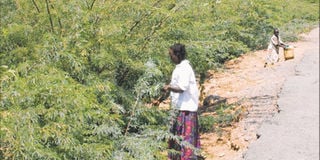
Women collect the poisonous ‘Mathenge’ weed. The weed is being used in making of animal feed. Kenya is turning to the destructive weed known as to generate electricity.File
Kenya is turning to the destructive weed known as ‘mathenge’ to generate electricity. The move is expected to increase power output from green energy sources and ease dependence on expensive diesel- generated thermal electricity.
Tower Power, an electricity generating company associated with Comcraft Group owned by philanthropist Manu Chandaria, has proposed to generate 23MW using ‘mathenge’ as the biomass with stations located in Baringo and Mombasa.
“The power plant will provide green energy to manufacturing factories run by the Comcraft Group and we shall sell the surplus to the neighbouring industries,” said Tower Power Commercial Director Krishnant Batt in an earlier interview.
Comcraft Group specialises in the manufacture of building materials including steel, aluminium ware and plastic products. The power project will cost Sh4 billion.
The project will provide a new stream of income for residents of Baringo and Taita Taveta where Tower Power Company intends to source the biomass, according to the Environmental Impact Assessment it published in The Daily Nation on Friday.
“The government is offering the best rates on the continent at Sh8 per unit and we want to capitalise on this,” said Mr Batt.
The new development is a win in the efforts to find new sources of electricity as Kenya experiences power rationing that has increased the cost of doing business, especially for manufacturers.
Kenya seeks to ease dependence on hydro electricity that provide up to 65 per cent of national power needs.
Electricity consumption rose by 12 per cent to 2513Kwh in the first five months of the year compared to 2250Kwh in the past five months of 2010, according to the Kenya National Bureau of Statistics.
Demand for electricity is expected to continue rising as the economy expands and due to the ongoing rural electrification
projects. The use of the mathenge weed would put a stop to its environmental destructive ways that saw farmers in Baringo take the government to court in 2006 seeking compensation because the leaves and seeds from the crop reportedly made their livestock to lose teeth.
The government introduced the plant in Baringo 25 years ago on recommendation of the United Nations Food and Agriculture Organisation to curb desertification.
“The plant contains a lot of energy and if well processed, it can be used to generate power,” said Mr Batt. [email protected]
Unlock a world of exclusive content today!Unlock a world of exclusive content today!