Kenya Power earns initial Sh940.6 million in government fibre deal

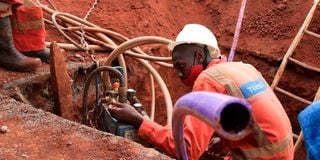
Workers lay fibre-optic cable in Nyeri town on August 18, 2020.

Photo credit: File | Nation Media Group

Listed utility firm Kenya Power earned Sh940.6 million from the government in the year ended June 2025 for work done on the national fibre-optic rollout under the State-backed Digital Super Highway project, new disclosures show.

The payout reflects partial payment for design, supply and installation of last-mile fibre infrastructure to government institutions under a contract awarded through the ICT Authority (ICTA).
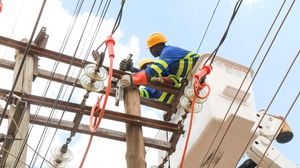
Kenya Power is deploying 100,000 kilometres of fibre, riding on its electricity network to connect 53,000 public offices, schools, hospitals and agencies countrywide.

The project is estimated to cost Sh10 billion in its first phase, making it one of the largest public ICT infrastructure rollouts in recent years.

“The Government, through ICTA, contracted the Company to implement the Last-Mile Fibre Optic Connectivity to government institutions across the country under the Digital Super Highway (DSH) Project,” wrote Kenya Power in its latest annual report.

“The Company’s mandate includes the design, supply, and installation of fibre infrastructure nationwide. In line with the agreed project milestones and deliverables, the Company received a reimbursement of Sh940.6 million from ICTA as at June 30, 2025.”

This amount, the power utility says, represents a partial settlement of the contract sum invoiced for works partially completed in accordance with the project agreement.

Kenya Power’s nationwide pole network gives the government a cheaper way to extend broadband compared to trenching new routes or leasing space from private carriers.

The DSH rollout is part of the State’s push to ease public access to vital services such as digital learning and telemedicine, in addition to supporting the shift to electronic government records.

It is also poised to attract data-driven businesses to towns that have historically relied on costly satellite internet.

Using existing utility infrastructure to deliver broadband is seen as an easier route for the government to speed up coverage while reducing duplication of public spending.

For Kenya Power, the deal provides a new revenue stream outside electricity sales at a time the company is under pressure to improve cash generation.

The move marks one of the firm’s most visible diversification steps as it seeks to broaden its earnings beyond a tariff-regulated electricity business.

At its inception, the President William Ruto-led Kenya Kwanza administration spelt out a plan to lay down at least 100,000 kilometres of fibre optic across the country to improve network connectivity, amid network challenges in high security-risk areas.

The project, first announced by the president a month after he assumed office in 2022, falls under the infrastructure pillar of the country’s digital transformation agenda and is aimed at boosting internet connectivity across the country and making its access stable and reliable.

“The Government is committed to invest in the digital superhighway and the creative economy, which will be enablers of transformation, productivity and overall competitiveness,” the president said at the time.

“Over the next five years, the Government will ensure universal broadband availability by hastening the roll-out of connectivity throughout the country. The laying out of an additional 100,000km of the national fibre-optic network is expected to deliver this target,” he added.

PAYE Tax Calculator

Note: The results are not exact but very close to the actual.