Kenya rolls out digital cargo system to cut Mombasa port delays

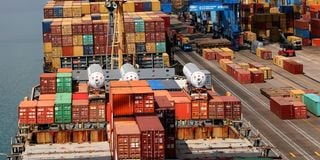
Offloading of Cargo in one of the Vessels that docked at the Port of Mombasa on March 06, 2024. 

Photo credit: File| Nation Media Group

Kenya is introducing an integrated digital platform at the port of Mombasa for faster clearance of goods, marking a significant step in efforts to reduce congestion and shorten turnaround times at the country’s busiest maritime gateway.

The platform, known as the Port Community System (PCS), is being implemented in a joint partnership between Kenyan software development firm EMEA Port Logistics and Dubai-based logistics group DP World, working alongside the Kenya Ports Authority (KPA).
The new system is designed to link all players involved in import and export processing, including shipping lines, clearing and forwarding agents, transport firms and government departments, on a single online network.

Through the system, users can track shipments, submit documents, make payments and book gate entries electronically, replacing the multiple digital and manual steps that currently slow down cargo release.

“This partnership with DP World marks an important step in advancing Kenya’s logistics capabilities. Together, we’re creating a connected and transparent ecosystem that benefits all players in the trade chain,” said Jack Rono, director at EMEA Port.

DP World said the platform would simplify coordination among agencies that handle cargo clearance, allowing information to move simultaneously across institutions that traditionally rely on separate databases.

It projects that once fully deployed, the new framework could cut average cargo clearance time by about 30 percent.

The initiative seeks to address long-standing inefficiencies at Mombasa port, where overlapping systems and paper-based procedures have kept dwell times among the highest in the region.

Efficiency at the port is closely watched through Time Release Studies, which measure how long it takes for goods to move from vessel arrival to release.

The most recent review by the statistics and customs authorities put average clearance at between 13.5 days, depending on cargo type.

The Mombasa port handled 32.86 million tonnes of cargo throughput between January and September 2025, compared to 29.97 million during the same period last year, marking a 9.6 percent growth.

In the latest data, the port registered 1.55 million twenty-foot equivalent units (TEUs) between January and September 2025 compared to 1.46 million TEUs in 2024.

The increase represents a growth of 91,000 TEUs, equivalent to 6.2 percent.

Kenya operates several parallel digital tools, including the Kenya TradeNet System, which handles trade documentation, and the customs platform run by the Kenya Revenue Authority (KRA), which do not always communicate seamlessly.

By merging these processes into one interface, the PCS is expected to reduce duplication and lower compliance costs for importers and exporters.

In practice, that means information on a single container will be entered once and updated automatically across all relevant agencies.

DP World has been expanding its digital logistics platforms in Africa as part of a wider strategy to modernise trade flows.

The firm already operates similar systems in Tanzania and Mozambique, linking ports, customs agencies and transport corridors under unified data networks.

The deployment in Mombasa also underscores Kenya’s renewed push to digitise trade procedures and align with regional efficiency standards under the African Continental Free Trade Area framework.

A seamless digital chain is considered key to cutting non-tariff barriers that raise logistics costs across East Africa.

PAYE Tax Calculator

Note: The results are not exact but very close to the actual.