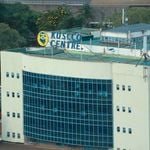
The Kenya Union of Savings and Credit Co-operatives (Kuscco) has turned to the State for assistance in tracing 150 Saccos that borrowed Sh1.33 billion in loans before going dormant or closing shop.
The umbrella organisation for Saccos has written to the Commissioner for Co-operative Development, David Obonyo, to assist in finding the saccos with an aim of recovering the cash.
Kuscco is still reeling from the loss of Sh13.3 billion to financial improprieties linked with some of its former officials.
In the letter, Kuscco says the 150 Saccos tapped the loans from its Central Finance Fund (CFF), which offers support for Saccos in need of cash to steady their operations.
Records show that 35 of the 150 Saccos took loans yet they had no deposits at Kuscco at all. The rest had deposits of Sh133.8 million at Kuscco.
In total, the 150 borrowed Sh1.46 billion which, when netted against the deposits, left Kuscco with the exposure of Sh1.33 billion that is ultimately borne by members of many Saccos that funded Kuscco with deposits and equity investments.
However, all the said Saccos have marked themselves as either dormant or not in operation, making it difficult for Kuscco to trace them.
Alarmed that former bosses may have extended some loans to ghost Saccos, Kuscco wants to verify if indeed some of those Saccos ever existed in the first place and if they are still operating.
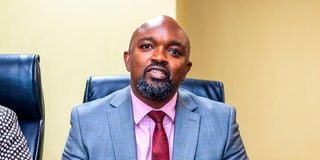
“We request your assistance in confirming the operational status of certain Saccos that borrowed loans from our CFF department,” Kuscco Managing Director Arnold Munene said in the August 1 letter seen by the Business Daily.
“These Saccos are currently listed as dormant or not in operation, and it is imperative for our records and due diligence processes to verify whether they are indeed inactive or have been formally liquidated.”
The highest exposure is from 42 Saccos from the western Kenya zone (Sh558.71 million), followed by 35 from Nairobi (Sh290.74 million), 36 from Rift Valley (Sh191.53 million), 21 from Mount Kenya (Sh165.24 million), and 16 from Coast (Sh125.93 million).
Some of the top defaulters who cannot be traced are Nitunze (Sh320 million), Mucumewo (Sh90.02 million), Thika Tea (Sh87.19 million), Sukari (Sh78.6 million), and Soko Sacco (Sh38.19 million).
Kuscco wants to find out if all of the Saccos ever existed in the first place and whether any formal processes, such as cancellation of their registration or liquidation, have been undertaken.
The move marks the latest attempt by Kuscco to recover billions of shillings that were lost over the years through a scheme that was uncovered by a forensic audit carried out by PricewaterhouseCoopers (PwC).
The findings of the audit led to the dismissal of former officials, including the then managing director George Ototo.
Recently, Mr Obonyo issued demand notices to 58 other Saccos, which it said are traceable, in a bid to recover Sh1.36 billion that they borrowed and defaulted on. He directed them to settle the money.
The 58 saccos borrowed Sh1.36 billion between 2001 and 2024 against deposits worth Sh368.39 million. Kuscco has partly offset the loans with the deposits, leaving the Saccos with a combined loan balance of Sh987.86 million, which they are not servicing.
Top defaulters include Kencom Sacco, which took a Sh377.5 million loan, Nacico Sacco and its sister entity Nacico Investment Co-op (Sh358.01 million) and Maseno University (Sh106.43 million).
The push to trace the 150 Saccos and the pressure on the other 58 are part of the efforts to recover billions of shillings that were lost at Kuscco amid weak bookkeeping and manipulation of financial records which helped generate phantom profits.
Apart from loan recoveries, Kuscco is now auctioning houses and land held by defaulters of mortgages issued under its housing subsidiary. In addition, it is looking for an investor to buy a 60 percent stake in its insurance subsidiary called Kuscco Mutual Assurance.
The land and houses under auction are located in different parts of the country, including Kitengela, Kiserian, Kajiado, Nyayo Estate, Kisumu, Thika, Machakos, Webuye, Bungoma, Kisaju, Lukenya, and Syokimau. The Kitengela houses are priced at Sh9.5 million, according to auction details.
Kuscco had by early February this year paid Sh132.22 million owed to small saccos, being the principal amount they had put in the union. The move was to avert the collapse of the small saccos that had put most of their members’ deposits in the union for a return.
The entity has sold over 32 vehicles and continues to liquidate other non-core assets. Kuscco has also trimmed its workforce to 87 from 246 and closed the branches it had in Kitengela, Thika, Nyeri, Meru, Eldoret, Kericho, Kisii, and Kisumu as it moves to cut operating expenses and concentrate on advisory, training, and lobbying.
Formed as a lobby group for saccos, Kuscco expanded into taking deposits and lending to them while it remained unregulated.
Kuscco aims to recover at least 70 percent or Sh6.2 billion of the Sh8.8 billion principal amount that saccos had invested in the umbrella entity within the next three years. This is through loan recoveries, auctions of houses and land for those who defaulted on mortgages, and the sale of a stake in the insurance arm.
The recoveries are part of the targets set for Kuscco’s new nine-member board that was installed in May this year. The board has also been asked to steer the entity from the shaky past that threatened its collapse.
A PwC forensic audit revealed that Kuscco, which used to receive billions of shillings from saccos for investments and lending to co-operatives, had cooked its 2022 financial accounts which received the blessings of an external auditor, Alfred Basweti of Omenye and Associates.
However, it emerged that Mr Basweti had died long before, and that Kuscco officials forged his signature. Some of the former Kuscco officials, including Mr Ototo, were arrested in February this year and charged.
Others who were former chairman George Magutu Mwangi, ex-finance manager George Ochola Owino, Jackline Pauline Atieno Omolo, who was offering legal services, and Mercy Njeru, who led the controversial radio project.