Time flies with great content! Renew in to keep enjoying all our premium content.
Prime
Madhvani empire marks 100 years
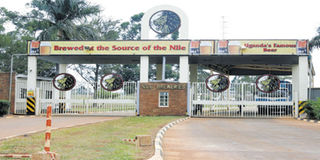
Nile Breweries in Jinja, one of the companies in which Madhvani had a stake before a takeover in 2002 by South Africa’s SAB Miller. The Madhvanis’ business empire covers energy, aviation, tourism and software development. File
Mark Antony in Julius Caesar asserts that “The evil that men do lives after them and the good is often interred with their bones.” An Indian Ugandan-turned businessman, entrepreneur, industrialist and philanthropist, Muljibhai Prabhudas Madhvani’s good could have eluded those who wrapped his bones.
It is 100 years since the 18-year-old hatched a business that now employs more than 7,000 people. In the 19th century under colonial rule Indians were dispatched to Africa to aid the construction of the famed “Lunatic Express” railway line from the port town of Mombasa to the River Nile in Uganda.
So tough and treacherous were the conditions that even the local population were reluctant to partake in the railway’s development. Hrishikesa N J, a fourth generation descendant of Madhvani, and now a director of Equatorial Shipping Lines says, “The story of the railway reminds me very much of the Indian attitude to enterprise in East Africa.
“The farming skills that my ancestors acquired in India, together with the savvy business tools they developed through trading in Uganda were a perfect recipe for the beginnings of commercial agriculture in the country.”
He goes on: “Again, this was no easy task; the land ‘allocated’ to them to grow sugar cane was effectively a disease-ridden swamp, infested with snakes, crocodiles and far from any commercial trading centres.
So determined were they to succeed that despite these conditions, they were able to develop their land into a sugar estate, which today is ranked among the largest and most successful in Africa.”
Today, lush greenery of cane plantation that banquets the outskirt of Jinja on your way to Iganga and Kenya is a dream come true for a young man who in 1908 arrived in Africa in search of solace having lost his mother in his early teenage years.
Muljibhai dared to live in the bushy Kaliro, now a town in Busoga sub region where he started as an attendant in his uncle’s shop.
Against the warnings of Sir William Frederick Gowers, the then Governor of Uganda, that sugar business would not pay off, he secured 800 hectares from Busoga kingdom and the colonial government, before setting up Kakira Sugar Factory in 1930.
By 1960, Madhvani had taken root in the Ugandan economy.
The commodity market was promising; an evolving middle class bred by industrialisation was to serve as a stimulus. Several decades ago, before the phrase “co-operate social responsibility” was coined, Muljibhai keenly took care of his employees and community well-fare. Workers and dependents enjoyed free education, housing and health care.
Over time, Kakira has intricately become a part of Jinja, located in the south eastern region, about 87km east of the capital Kampala.
Sugar plantations
Jinja’s story of social, political and economic development is incomplete without a mention of the Madhvanis. It has been Kakira sugar plantations and the factory owned by the family that has felt the weight as many families turn to it for survival in the worst economic times, as well as, the happiest moments.
Former president Idi Amin’s expulsion of the Asians from the country in 1972 was to forever change the history of this town. Like Rajab Kitto, the public relations officer of Jinja municipality says, it is Kakira that sustained Jinja’s heartbeat over the years.
He says after the return of Asians in 1982 and consequent reclaiming of their assets under the Asians expropriated Property Act, “Madhvani is what has jerked Jinja to the 21st century. One was either employed by Madhvani or government, period.”
At the time of expulsion, the group had grown into a complex of 52 industrial, commercial and agricultural companies operating in East, Central and Southern Africa.
Other than Uganda, the Madhvanis knew no other place for home; frustrated and desperate, they left for the UK only to return under the expropriated Properties Bill extended by the 1982-sitting government, the oil and soap mill was in a despicable state, the sugar factory was merely a shadow of its former self.
The district chairman, Fredrick Gume says one cannot speak of Jinja without the “foundation, which is Kakira and Madhvani.” He argues that besides the colonial government, they built the first secondary schools, Muljibhai Madvani Wairaka College and Muljibhai Madvani Jinja Girls’ school before they were taken over by government.
It was Madhvani’s family that built and offered a full-fledged children’s referral hospital which specialised in treating children, on top of handing over to the then government Jinja Municipal Hall and the district’s House of representation, both highly prized structures in the town.
As a young man who had lost his mother, Madhvani, had while playing, run after a jet shadow hoping he would catch the real jet one day.
By his death in 1958, the son to Prabhudasbhai and Laduma Madhvani of Aasiyapat in India, had not only caught up with the jet, but subdued it.
He had established Kakira Airport in his empire, operational to date.With a maiden step toward diversification, they ventured into textile before trying out brewing business at Nile Breweries which in 2002 was taken over by South Africa’s SAB millers.
As the biggest conglomerate in Uganda, they have successfully ventured into tourism with its iconic health club at Chobe Safari Lodge, which CNN ranked fifth best in the world; insurance, floriculture, software development and construction.
With Kakira as the flagship company, the group has turned to clean power generation out of the fibrous material, bagasse producing 22MW of electricity, 12MW of which is supplied to the national grid.It is expected, power generated will rise to 53MW after the installation of the 515o c boiler.
Thirty two megawatts will be sold to Uganda Electricity Generation Company as a way of catering for power deficit in the country.
A mausoleum that was constructed in his memory lies at the lakeside along that of his elder son and heir, Jayant Madhvani.
After the death of their father, Jayant and his brother Manubhai, oversaw the group’s diversification into oil and soap manufacturing, steel, tea and glass production.
Mayur Madhvani, his last son and current joint managing director of the group companies has proved he is made of stunner stuff, standing stiff and focused to propelling the empire far and wide. Madhvanis have been championing a unique model of corporate social responsibility, which is already accruing enormous benefits to the surrounding communities.
The company partnered with the Busoga Sugarcane Growers’ Association (BSGA) and initiated the Kakira Out growers Rural Development Fund (KORD) in 2005.
The fund is majorly financed through contributions from Kakira Sugar and BSGA. For each tonne of cane supplied by BSGA, USh250 goes to the fund while USh125 is deducted from each tonne of cane harvested from the company’s plantations to run the fund. By October 2010, about Shs2.7 billion had been realised.
The fund improves the quality of life of the community within a 30km radius of Kakira Sugar Factory, an area covering 17 Sub Counties in Jinja, Mayuge, Iganga and Kamuli districts.
Shs600m every year is channelled through Tropical Bank, Jinja branch, to facilitate the farmers’ access to soft loans and over 1,000 farmers have so far benefited and about Shs2b loaned out.
This is the more critical reason why Kakira Sugar Limited is a flagship company is Jinja’s blossoming industry.
The sugar factory currently operates at a crushing capacity of 4,000 tonnes cane per day during a 10.5 month crushing season.
This season, the factory will crush 1.2 million tonnes of cane to produce over 100,000 tonnes of sugar, maintaining its position of Uganda’s largest sugar producer.
This company employs over 7,500 people and has been the catalyst for socio-economic development of the rural areas surrounding the mill, providing the means of livelihood to over 75,000 people in the South Busoga region.
editorial @ug.nationmedia.com
Unlock a world of exclusive content today!Unlock a world of exclusive content today!