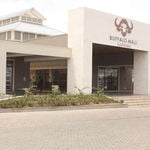
A company that manages Nextgen Mall on Mombasa Road has been handed a reprieve after the High Court quashed a Sh119.8 million tax demand as assessed by the Kenya Revenue Authority (KRA).
High Court judge Benjamin Njoroge set aside the assessment saying it was erroneous as the Commissioner of Domestic Taxes failed to consider documents presented by Nextgen Management Company, therefore arriving at a wrong conclusion.
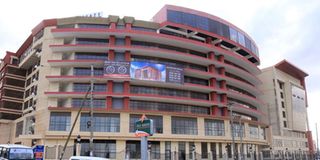
The Tax Appeals Tribunal had, in a decision in April last year, allowed the assessment and ruled that the property management firm had failed to discharge its burden by providing documentation to dispute the demand.
The judge observed that the documents requested by the KRA had been provided by the company but were ignored by the Tribunal in its decision.
According to justice Njoroge, the failure to look at the documents denied the company a fair hearing.
“The tribunal should have given some consideration and weight to the documents already provided by the Appellant before making a final determination,” said the judge.
He directed the matter to be remitted back to the Tribunal for fresh hearing on merits, by a different panel.
Evidence tabled before the court was that the KRA issued the company with a notice of audit in July 2021 and requested supporting documents.
After review, preliminary audit findings were issued in December 2021. The taxman said it was not satisfied with the firm’s response, and issued an additional tax assessment of Sh119,873,193 in August 2022.
The company objected and provided supporting documents, which were reviewed by KRA, before confirming the assessment in November 2022.
Dissatisfied, the property management company filed an appeal in December 2022, which was heard by the Tribunal and ruled in favour of KRA.
The company then moved to the High Court maintaining that it had submitted the documents requested including memorandum and articles of association, detailed clarification on the company’s activities as well as copies of sample agreements, sub-leased agreements, and annual general minutes for 2017 to 2020.
KRA submitted that the company had claimed unsupported office expenses amounting to Sh2.67 million, which were disallowed for lack of documentation.
Further, the firm claimed costs associated with services offered to business occupants of its premises, which it submitted should have been subjected to tax.
The KRA said despite being granted several opportunities during the audit, objection review, and even by the Tribunal, the taxpayer failed to supply the necessary records to substantiate its claims.
And since the burden of proof under Section 56(1) of the Tax Procedures Act rests with the taxpayer, the failure to provide adequate evidence justified the assessment.
The taxman added that the Tribunal reviewed the additional documents provided and found them irrelevant and insufficient, and therefore, upheld the assessment as accurate.
The court noted that the Tribunal requested among other documents, a copy of the company’s general ledger for years 2017 to 2020 demonstrating income and expenses in the stated period, copies of sample sale agreements, sublease agreements, as well as AGM minutes for 2017 to 2020.
The judge said a cursory look at the objection decision revealed that KRA acknowledged receipt of the Memorandum & Articles of Association for the company, detailing the company's activities.
“Therefore, contrary to the findings of the Tribunal, the Appellant did not only supply the sale and lease agreements out of the documents it had been requested to supply, but it also provided the Memorandum and Articles of Association,” said the judge.
Judge Njoroge added that the company also provided some detailed clarification of the company’s activities as well as copies of sample agreements, sub-lease agreements and AGM minutes for 2017 to 2020.
“It would thus be erroneous for the Honourable Tribunal to find that the Appellant had failed to discharge the burden of proof, yet it ignored and did not consider the documents aforesaid,” said the judge.