Old Mutual sells NSE stock broking unit to fintech firm

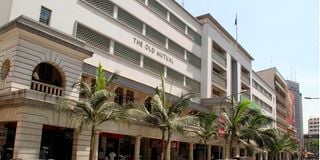
Old Mutual

Old Mutual building on Kimathi Street, Nairobi.

Photo credit: File | Nation

Old Mutual Holdings Plc has quietly sold its stock brokerage subsidiary to a Kenyan fintech for an undisclosed amount, as it makes progress on its strategy to simplify the business and focus on insurance and asset management.

The regional underwriter has sold Old Mutual Securities to Kweli Capital, a technology-driven investment company best known for designing, structuring, and implementing the Boma Yangu affordable housing platform.
The South Africa-backed firm exited the stock brokerage business in the wake of its strategy of focusing on insurance and fund management business, which has pushed it to sell land and office blocks in the race to quit real estate.

The sale marks another turn of its Kenyan strategy that hinged on the financial-supermarket model, which pulls together insurance, banking, securities, and other financial operations under a single roof.

The model was in vogue in the decades leading up to 2010, sparking a frenzy of buyouts of stockbrokerage firms, notably by banks, seeking to emulate the "one-stop in shopping" pioneered by global financial services firms like Citigroup Inc in the 1990s.

Old Mutual in 2010 acquired a 70 percent stake in Reliable Securities, whose main shareholder was Jos Konzolo and followed with the purchase of shares in microfinancier, Faulu Kenya, in 2013.

It sought to entrench the financial supermarket model as bankers—Equity Bank, Cooperative Bank, NCBA and ABC Bank—splashed tens of millions of shillings in buying stock brokerage firms.

“The decision to divest Old Mutual Securities was made to streamline the East Africa portfolio to concentrate on insurance, asset management and banking lines of business,” Old Mutual Group chief finance officer David Muchai told the Business Daily.

“The decision to exit stock brokerage was made on February 20, 2025.”

Besides selling Old Mutual Securities, the firm disclosed that it would offer its entire Sh19 billion real estate portfolio for sale, including the 33-storey Old Mutual Tower in Nairobi’s Upper Hill.

The Group has other properties, including land in Uganda, an office block in Rwanda and apartments in South Sudan.

Old Mutual Securities has had a tough financial run in recent years, mirroring the fleeting stock brokerage business, which has taken a hit in the past decade from reduced market activity.

Last year, the brokerage firm posted a narrow Sh6.5 million profit, marking a turnaround after losses of Sh6.5 million in 2023, Sh42.3 million in 2022 and Sh6.5 million in 2021.

The parent firm, Old Mutual Holdings Plc, has been on a recovery plan, posting a Sh838 million profit in 2024 to break even after losses of Sh2.2 billion in 2022 and Sh114 million in 2023.

The firm flirted with losses from high operating expenses against modest growth in income from operations.

In 2010, Old Mutual ended its decade-long push to acquire a seat or a stockbroker at the Nairobi Securities Exchange (NSE), with the Reliable Securities deal.

The NSE was then structured as a mutually owned firm that made it close to impossible for aspiring stockbrokers to obtain an operational licence.

This saw investors like Old Mutual acquire struggling or collapsed institutions just to get a seat at the bourse.

Old Mutual's previous attempt to acquire a seat at the bourse failed, with the firm missing out on the chance to acquire the vacant seat occupied by the collapsed brokerage firm, Francis Thuo & Partners, despite making a bid of Sh440 million.

Renaissance Capital eventually bought the Nairobi bourse seat for Sh251 million at a time when the NSE was seen as an exclusive club with high barriers to entry.

In 2008, NIC Capital, now part of NCBA Group, bought a 60 percent stake in Solid Investments for Sh150 million, ABC Bank paid Sh171 million for Crestfield Securities and Equity spent Sh150 million on Francis Thuo & Partners.

The increased acquisitions were seen as being driven by deep-pocketed institutions out to get a piece of Kenya’s fast-growing capital markets, whose profile rose globally with the listing of Safaricom in 2008 and Equity Bank in 2006, drawing in foreign investors who dominate trading at the Nairobi bourse.

Legacy stockbrokers, including Discount Securities, Sterling Capital and Dyer & Blair, now hold a minority 20 percent share of the NSE from full ownership a little over a decade ago.

Kweli Capital says there are strategic advantages to acquiring an established brokerage like Old Mutual Securities.

“OMS [Old Mutual Securities] already operates a fully licensed, compliant platform, ensuring seamless entry into the capital markets without the cost and time of pursuing new licensing. Today, OMS serves over 30,000 clients, giving Kweli Capital an immediate market footprint and credibility that would take years to build organically,” the firm said in response to Business Daily questions.

“Importantly, the acquisition brings a skilled team with deep expertise in securities trading, safeguarding continuity and strengthening execution.”

Old Mutual held a 75 percent stake in Old Mutual Securities, where minority shareholders include First Quantum Holding Limited, TransAfrica Capital (Propriety) Limited and Josphert Milimu Konzolo.

Kweli Capital’s leadership includes Kris Senanu, who serves as its chairman.

Stockbroking firms on the NSE have been fighting for new revenue streams after the stock market boom that brought hundreds of thousands to the market dimmed.

The thousands of new investors, notably retail dealers, translated to high revenues for brokerages.

Brokers charge a commission of 1.5 percent for equity transactions above Sh100,000 and 1.76 percent for transactions below this amount.

Net brokerage commissions on bonds are meanwhile set at 0.024 percent on the value of bond transactions in the secondary market.

Most brokerages have been forced into diversifying revenue streams, including offshore investments, corporate finance advisory and collective investment schemes (CISs).

Standard Investment Bank (SIB) has ventured into offshore instruments through its multi-asset strategy fund, Mansa-X and has a permit from the Retirement Benefits Authority (RBA) to manage pension funds.

NCBA Investment Bank, Dyer & Blair Investment Bank, KCB Investment Bank, Dry Associates Investment Bank and Equity Investment Bank were the most profitable stockbroking businesses in six months to June 2025, boasting net earnings between Sh89.86 million and Sh278.17 million.

PAYE Tax Calculator

Note: The results are not exact but very close to the actual.