Time flies with great content! Renew in to keep enjoying all our premium content.
Prime
Queries over timing of Duala air crash report
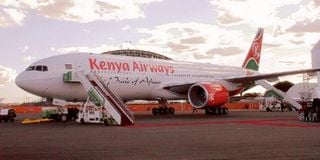
Lawyer claims late publication of the findings aimed at blocking families from seeking full compensation under the Montreal Convention. Photo/FILE
Last week’s release of the report on the 2007 Kenya Airways plane crash in Duala, Cameroon, was timed to bar dependants of the victims a chance to seek full compensation for the losses incurred, a lawyer representing the families said, citing the two-year limit that international law has imposed on such suits.
Mr Emmanuel Pensy, a Cameroonian lawyer, told BBC, the UK broadcaster, that release of the report shortly after the time frame provided by Montreal Convention to file claims suits was suspect, adding a new twist to the challenges facing the Kenyan airline since last week’s publication of the findings that blamed pilot error for the accident.
The convention is a set of industry regulations that stipulate how dependants of those killed in aviation accidents can be compensated.
The Cameroonian families are also promising to knock on Kenya Airways doors for further compensation, citing the airline’s failure to meet its obligations to the victims as provided for under the Montreal pact.
Mr Pensy told the BBC that Kenya Airways had paid out only one third of the total amount due to each passenger according to the convention that Kenya signed seven years ago.
“Few families of Cameroonian victims of the air crash have been paid their dues,” he said in another interview with the Cameroonian agency Camerpress following the release of the report.
Thirty seven Cameroonian nationals perished in the May 5, 2007 that killed all the 114 people on board.
The lawyer claimed that the belated release of the report was aimed at locking out families of the victims from making the unlimited liability claims they are entitled to under the Montreal pact.
Kenya Airways has maintained a reconciliatory approach to the compensation demands with its managing director Titus Naikuni offering to open further talks with the Cameroonian families.
“We are ready to discuss these issues,” he said at a press briefing last week, adding that the airline has lawyers in Cameroon who are accessible to the affected families.
Kenya Airways said it had not received any notification of pending law suits, although legal experts said the findings of the investigations provided new grounds for families to push for further compensation.
Nairobi lawyer Peter Simani said nothing stops families of the victims from taking fresh legal action against the airline, or even the manufacturer for further claims.
“There is room to sue,” he said, adding that it all depends on legal technicalities such as the signing by the families of agreements that bar them from making any further claims upon receiving earlier dues.
Mr Simani said KQ could however face a major challenge dealing with US citizens who are allowed under the 5th Forum of the Convention to sue from their home state over and above what is set in the Montreal pact.
Under this law, US nationals can also demand compensation for immaterial damages. There was one American citizen on board.
Mr Simani reckons that compensation of air crash victims varies with a wide range of factors, including the type of ticket held by the passenger and how it was purchased.
“The ticket is the binding contract between the airline and passenger and the terms and conditions vary depending on the type of ticket purchased leading to claims paid out,” he said.
The Montreal Convention, which came into force in 1999, establishes uniformity and predictability of rules relating to the international carriage of passengers, baggage and cargo.
The convention was crafted with the help of the International Civil Aviation Organisation (ICAO) — a UN agency with the mandate to promote safe and orderly development of international travel.
Kenya signed the convention in May 1999 and domesticated it in November 2003.
It outlines compensation guidelines for flight delays, loss or destruction of baggage or cargo and death in the event of an air crash.
Under the Convention, airlines are liable for damages of up to $100,000 Special Drawing Rights for each passenger in case of death or (Sh7.7 million).
Mr Pensy reckons that Kenya Airways has paid only one third of the amount.
Article 28 of the Montreal Convention allows carriers to make advance payments without delay to a natural person in the case of death or injury of passengers to meet the immediate economic needs of such persons.
“Such advance payments shall not constitute recognition of liability and may be offset against any amounts subsequently paid as damages by the carrier,” the convention says.
KQ made advance payment of $30,000 (Sh2.3 million) for each of the Duala air crash victims in 2007.
It is not clear whether the airline made any additional payments.
“Instead of waiting until the extent of compensation was agreed, we felt it was advisable to pay something in advance. It was an advance not the full amount,” Mr Naikuni said last week after Cameroonian authorities published its findings on the air crash.
Kenya Airways said that it had settled 92 per cent of the claims and that the remaining cases had been stalled by disagreements over letters of administration or failure to reach an agreement with the families.
Last week Kamau Karori, a partner at Iseme, Kamau & Maema Advocates, told the Business Daily that the conclusion that pilot error may have caused the air crash exposed Kenya Airways to the risk of renewed claims from families of the victims.
“They can sue under Common Law based on the investigator’s findings that the accident was caused by pilot error,” he said.
Last year British families sued the American plane manufacturer Boeing seeking to know the cause of the Duala accident.
The suit was based on claims that the aircraft was “defective and unreasonably dangerous” causing the crash.
It alleged that the plane’s spoilers – the flaps on the wing which control aircraft speed – were faulty, causing the aircraft to lose thrust as it climbed.
But official investigations indicate that the aircraft and engines were operating normally when the accident occurred.
The Cameroonian Civil Aviation Authority released the report, citing loss of control by the crew, inadequate operational control and lack of crew co-ordination as the “probable causes” of the crash.
The Boeing 737-800 crashed in the midst of a thunderstorm less than two minutes after take-off, but the report said poor weather or mechanical error had nothing to do with it.
“The air plane crashed after loss of control by the crew as a result of spatial disorientation, after a long slow roll, during which no instrument scanning was done and in the absence of external visual references in a dark night,” the report says.
The Duala report said the pilot didn’t adhere to standard operating procedures had poor situational awareness and “reacted inappropriately in the face of an abnormal situation.”
The plane crashed nine seconds later, a minute and 42 seconds into the flight killing all 114 people on board.
The report advised KCAA to strengthen its oversight operations, especially with regard to operational manuals, their application and decision-making in matters of safety especially concerning technical flight crew.
Mr Naikuni said the airline was already training pilots on recovery as a necessity, though this training was not mandatory earlier.
The airline has defended its recruitment system saying that all its pilots were adequately trained and had to meet a minimum set of qualifications to operate.
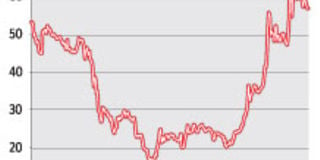
Kenya Airways share price remained stable at Sh57 at the Nairobi Stock Exchange and stockbrokers said it was expected to remain relatively stable.
In the past one year the airline’s share price has risen by over 160 per cent.
Unlock a world of exclusive content today!Unlock a world of exclusive content today!