Vodacom Group expects the advance dividend it gave the government as part of the Safaricom share sale transaction to be repaid within two or three years, signalling expectations that the telco will increase the size of its cash distribution to shareholders in the short term.
In a conference call with analysts, the South African firm said that it considered expected dividend flows over three years in order to arrive at the size of the facility to lend to the government, while also factoring in a return of about 16.5 percent.
The accelerated dividend of Sh40.2 billion is part of the deal in which the multinational is also buying a 15 percent stake in Safaricom from the Treasury for Sh204.3 billion or Sh34 per share through a Kenyan investment vehicle known as Vodafone Kenya.
Vodacom will then get rights to Sh55.7 billion worth of future Safaricom dividends that will accrue on the government’s remaining shareholding of 20 percent, giving it a discount of Sh15.5 billion.
“We took a percentage of expected dividends over a three-year period, and then we discounted it at an internal rate of return (IRR) of 16.5 percent. The way it works is if those dividends are more than the percentage, and it will pay down the facility quicker, in which case the IRR will go up,” said Shaun Biljon, the group financial controller at Vodacom.
“However, we’re capped at 18 percent IRR. So, we actually fully expect it to be paid down in just over two years.”
IRR is a discount rate that allows a company to calculate the present value of future cash flows, effectively allowing a firm to estimate the annualised return that an investment is expected to generate over a set period.
Therefore, from Vodacom’s point of view, it is effectively lending the dividend facility at a rate of 16.5 percent per annum.
In the year ended March 2025, the Treasury banked full-year dividends worth Sh16.83 billion from its 14.02 billion shares in Safaricom, which paid shareholders Sh1.20 per share for the period. The payout was split between an interim dividend of Sh0.55 per share and a final dividend of Sh0.65 per share.
If the telco were to maintain the same dividend rate going forward, the Treasury would be in line to earn Sh9.6 billion annually from its reduced stake of 8.01 billion shares, meaning that it would take about six years to offset the dividend rights sold to Vodacom.
However, a higher payout per share would allow Vodacom to recoup its lending to the government much sooner.
Vodacom disclosed that the dividend payout is being financed through a loan facility from a local bank.
For the share purchase transaction, Vodacom is utilising a credit facility from Vodafone Luxembourg.
This will fund both the government share deal and the concurrent purchase of a five percent stake in Safaricom that is held by its parent firm, Vodafone Group, at the same price of Sh34 per share.
Once the twin transactions are concluded, Vodacom will raise its ownership in Safaricom to 55 percent, giving it control after spending a total of Sh272.4 billion on the share purchases. The Vodafone stake will cost it Sh68.1 billion.
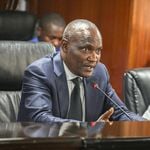
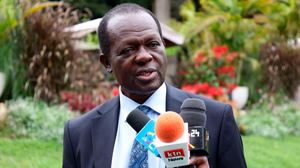
Speaking on Friday, Treasury Cabinet Secretary John Mbadi defended the cost of the dividend overdraft, saying that Kenya factored in the value of an upfront payment that is based on a future cash flow that is not guaranteed to materialise.
“That figure (Sh15.5 billion) is based on the assumption that the current profitability will be maintained. It may or may not; the markets are dynamic; the dividend is not guaranteed,” said the CS in an interview with the Business Daily.
“But we have gotten money in advance, which will be recouped. I think it has been properly valued.”
Safaricom has been one of the most consistent dividend-paying companies on the Nairobi Securities Exchange (NSE) over the years.
Last month, Safaricom disclosed that it will maintain its policy of paying out 80 percent of its net profit as dividends, despite dipping into the debt market with a Sh40 billion green bond programme.
For the current financial year, Safaricom announced that its net profit for the six months to September 2025 rose by 52.1 percent to Sh42.7 billion, helped by a smaller loss in Ethiopia and M-Pesa’s double-digit growth. The company usually announces its interim dividend within the first quarter of a calendar year.