Time flies with great content! Renew in to keep enjoying all our premium content.
Prime
Why M-NET’s Africa film monopoly is causing discomfort
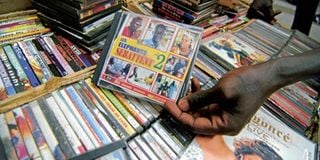
Shopping for taste: M-NET has a collection of African film titles produced in Africa and in the diaspora. /Reuters
Even before Haile Gerima’s film Teza was declared winner of the Golden Stallion of Yennenga at the FESPACO this year, M-NET had already signed a cheque for the film’s rights.
That effectively shut out any other distributors interested in the film —not unless they have the patience to wait for M-NET to screen it or have wads of notes to pay the network.
Shot for over 14 years, Teza is an epic film set in the chaos of the tyrannical regime of the former Prime Minister Mengistu Haile Mariam of Ethiopia.
From the same festival, which is considered the largest pan -African film event, Mike Dearham who is M-Net’s Head of Sales and African Film Library Acquisition bagged seven other African films.
In the library are several Kenyan movies, including Help by Robby Bresson, Enough Is Enough by Kibaara Kaugi, The Race, a Gikuyu film with English subtitles and Cajetan Boy’s films.
Mike, an expert on film distribution who once worked for the South African Film Resource Unit has other even more serious assignments at M-NET.
Besides buying rights directly from African filmmakers, M-Net Electronic Media Network has also been buying all rights of African movies in the hands of foreign distributors.
“We’re buying rights back from Europe,” said Dearham in an interview with Balancing Act.
So far, the library with over 450 African films contains 80 per cent of top African films ever made.
“There are two to three (key) film-makers missing. Some do not own their own rights and they are scattered across eight co-production companies and others do not believe in going for 25 years. People told us it would be impossible but it has turned out not to be,” he said.
In a brief on the library, M-NET says the facility was intended to feature a fine collection of African film titles—including features, shorts and documentaries produced in Africa and the African Diaspora.
There are plans to put the library online to facilitate Video on Demand (VOD) business where African film enthusiasts with some money can visit, pay and watch from wherever they are.
To do this effectively without legal hitches, the African film library has been acquiring commercial distribution rights after paying acquisition fee. With this film resource, M-NET has become a content provider for over 80 per cent of the free to air broadcasters in Africa, selling films at between $ 1,000 each but still retaining global rights to the films and even selling the films directly to consumers on DVD, especially through South Africa’s Nu-Metro.
“The initiative is principally an M-Net project aimed at further “Growing African film in the African century, says a brief from M-NET.
Besides owning and making money from this huge collection, M-NET also intends to capture and grow its African viewership by providing relevant content that is now the buzzword with African media circles as it struggles against increased media exposure and piracy on the continent.
Movie lovershave had a chance to watch foreign dramas several months before they hit the screens through these pirated material.
“M-Net’s strategy is to bring the channel into the homes of new audiences. These used to be elite audiences but once you reach a ceiling with them, you need to think about how to drive things to new customers. And this is where the thinking is.”
Though considered a friendly investment by many African filmmakers at a time when many broadcasters had ignored African content, M-Net’s library is now provoking serious debate around the world.
In 2007, filmmakers from around the world met to discuss the issue during the Cannes film festival.
“These deals are effectively removing these films from circulation —monopolising their distribution,” said South Africa’s National Film & Video Foundation in response to M-NET’s acquisition of rights of African films.
NFVF is a statutory body mandated by South African parliament to spearhead the development of the film and video industry in the country.
“Many of the top African classics such as films by the late Djibril Diop Mambety are inaccessible because of this arrangement.’
Olivier Barlet, a French critic and a specialist in African cinema says: “Most of the filmmakers, including Sembene Ousman, sold the rights: it was direct money for films which did not bring anything anymore! They did not realise the value of them in the next years.”
This means that the continent risks putting her heritage in the hands of a monopoly.
“The general feeling is that all the institutions that help African cinema did not grasp the issue in time,” said Eddie Mbalo of NFVF in an interview with Sudplanet an online publication on African cultures and arts.
He added: “A lot of filmmakers sold their rights without really knowing what the implications were.”
Besides heritage, critics of the M-NET library argue that the continent will not be able to develop a fully functional industry with monopoly tendencies.
This is because the circuit which included distribution will have been shortchanged hence killing sustainability of whatever kind of growth.
For decades, players in the African film industry did not give any attention to film distribution.
This is because most of their films were either funded by NGOs or other international organisations which owned the rights to the films but still allowed them opportunity to screen in festivals and other non-commercial venues.
For a long time, up to around 2000, most broadcasters on the continent sought foreign content. This was especially after the fall of URTNA, a regional organisation formed in the 60s to coordinate sharing of broadcast content in Africa.
Due to economies of scale that they enjoy, foreign producers easily provide content to African broadcasters at an affordable price.
Six years ago, MNET launched the African magic, mostly screening Nollywood movies that are fraught with magic and materialism. At first, this experiment was rubbished but it eventually became point of reference for many broadcasters around the continent.
When national broadcasters finally started airing more local content, film industries opened up, produced more films and other TV content.
Since donor money that has supported African film dried up, filmmakers have been waiting in the markets for distributors.
M-NET’s African magic came with their offer of between $ 1,000 to 3,000, filmmakers did not even think twice. After all, where else would they look?
But some broadcasters tell a different stoty. Last year, Unjiru TV and K24, two new kids on Kenyan TV block went out looking for Kenyan films. To their disappointment, there were none for the taking despite many offers from filmmakers.
According to Unjiru TV, the filmmakers do not own the rights; some do not even have an idea how long they will have to wait to be able to accrue some more benefit from these films. Most are owned by M-NET and have aired on African Magic.
“Most of the time we sell these films after we have squeezed all the opportunities from the Kenyan market,” says Mburu Kimani whose two movies have graced African magic. These are The Race and Dawa Ya Deni both in Gikuyu language with English subtitles.
“The life of a film is eternal as long as the medium lasts,” says Bob Nyanja who recently declined to sell his film rights to M-NET.
“You never know what the value of your movie will be in the long run,” he says in reference to his film Malooned and others which he has directed.
Lifetime rights His fears are that if he sold the rights to Malooned, he would not be able to make any more money from the film, especially in Africa as it will have been screened many times. Nyanja is also not sure whether he would even have the rights back.
According to the brief from M-NET, the deal with the African Film Library is what they refer to as a “Once off acquisition payment” which they consider a huge benefit to the filmmakers. This means they own rights to the movie for a lifetime.
To some filmmakers, the window of opportunity offered by M-NET is most welcome despite the poor pay.
With the little cash, argues one of them who would not like to be quoted, he is a able to go back on location and make a movie. He adds that its also an opportunity to prove to other broadcasters that local is golden and this will make their films more competitive.
Unlock a world of exclusive content today!Unlock a world of exclusive content today!