Why new container inspection fees have ruffled traders

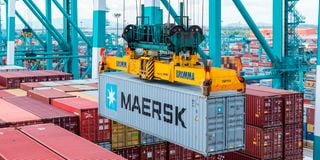
Since Kephis began inspection, different shipping lines have increased the operational costs, the latest being the Danish Shipping Line; Maersk, which controls more than 30 percent of the Mombasa port’s total throughput.

Photo credit: File I Nation Media Group

The Kenya Plant Health Inspectorate Service (Kephis) began inspecting all cargo containers both loaded and empty, in July 2025.

The move was met with uproar, as traders in crop products reported massive disruptions to their businesses owing to the inspection rule, with some cargo consignments left behind at the Mombasa port as impatient shipping lines set sail amid delays.
According to Kephis, all shipping lines and agents since July 1 this year, are required to share the manifest for both imports and exports with the department in advance to facilitate efficient inspection and compliance.

The state agency responsible for assuring the quality of agricultural inputs and produce said the certificate is enshrined in the law as provided under the legal notice 48 and CAP 324, which allows the institution to charge Sh500 for a container and Sh2000 for sea vessel inspection.

Why is container and vessel inspection important?

The agency said international markets for flowers, legumes, tea, coffee, and other agricultural products call for the consignments to be accompanied by a phytosanitary certificate, which is only issued after inspection.

Lack of such a certificate makes Kenyan products lose market as they fail to comply with international standards. Kephis also argues that the institution conducts inspections to avert importation of pests from disinfected containers and ships.

Barely a month after the said inspection began, Kephis announced that it had intercepted a ship carrying a heavy infestation of the Asian Gypsy Moth (AGM), which is a serious pest at the Port of Mombasa, and managed to successfully disinfect the ship.

Why introduce container and vessel inspection fees?

Kephis charges the amount for the inspection of sea vessels and their containers, and aircraft to ensure compliance with phytosanitary standards.

The agency said the implementation of fees for phytosanitary services will ensure quality imports and exports of agricultural produce and products while also preventing the introduction and spread of pests and diseases.

Traders, though, have dismissed the agency, saying it is funded by taxpayers’ money, hence it should receive support from the government.

The introduction of the fees began after President William Ruto in July 2023, asked different agencies to be innovative and generate more funds to run their programmes, where he said institutions that cannot sustain themselves will be merged or dissolved.

What has been the impact of the inspection fee?

Since Kephis began inspection, different shipping lines have increased the operational costs, the latest being the Danish Shipping Line; Maersk, which controls more than 30 percent of the Mombasa port’s total throughput.

The inspection fee has resulted in increased cost of freight, which will ultimately lead to a high cost of goods to the final consumer. Beginning this month, Maersk introduced an operational Cost Imports (OCI) fee for cargo destined for Mombasa.

In the tariff, the shipping line will charge $18 for a 20-foot container and $33 for a 40-foot container, while reefers will be charged $33 and $43 for 20-foot and 40-foot containers, respectively, saying the operational fee is a result of the new cost of inspecting and acquiring a phytosanitary certificate introduced by Kephis in August this year.

CMA CGM, Diamond Shipping, among other shipping lines, have also introduced such a fee to recoup the cost associated with the introduction of a phytosanitary certificate.

Apart from an increase in cost, Mombasa port and different container freight stations (CFSs) have experienced delays due to the lack of capacity of Kephis to inspect containers on time. As a result, several vessels have left Mombasa half-empty without containers after their berth time elapsed without receiving containers, contributing to the current empty container congestion at the port and container depots.

What is the reaction of traders and shipping agents?

Shipping agents in Mombasa have argued that introduction of the services is a duplication of duty to what Kenya Port Health has been doing all along. Port health under the FAL convention board the ships to ensure conformity of edibles and crew hygiene, including medicines onboard.

The shippers said Kephis has no business to do with inspection of ships since, as per the International Maritime Organization (IMO) all containers are inspected from the port of load by qualified surveyors for empties and laden by various government organs and issued with a Certificate of Conformity (COC) hence, charges are not warranted.

Shipping is regulated by international laws, and Kephis is just causing additional delays in the supply chain, the players lamented.

PAYE Tax Calculator

Note: The results are not exact but very close to the actual.