MPs have been put to the test as a committee of the National Assembly pushes for an overhaul of the model for sharing of national revenues to counties, akin to the Constituency Development Fund (CDF).
The National Assembly’s Constitutional Implementation Oversight Committee wants MPs to adopt a model that allocates three-quarters of the shareable revenue equally across the 47 counties, and the remaining 25 percent based on a county’s population.
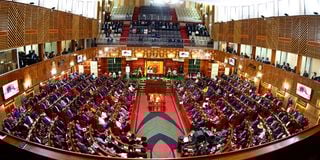
The proposal would, however, encroach on the Commission on Revenue Allocation’s (CRA) turf since it has been in charge of developing formulas to be used in determining the amount each county gets since devolution kicked off.
“A model like that of the CDF needs to be adopted and used when it comes to counties' shareable revenue,” the committee says in a report.
Under the CDF model, 75 percent of the money budgeted for the kitty is shared equally among the 290 constituencies, while the remaining 25 percent is shared based on a constituency’s population size.
On the other hand, CRA formulas prioritise a county’s population, geographic size, poverty levels, and service delivery needs to determine how to allocate the shareable revenue among devolved units.
The main disparity between the committee’s proposal and the current CRA formula is the weight allocated to a county’s population and the amount to be allocated equally among counties.
While the committee wants 75 percent of the shareable revenue to be shared equally among counties, CRA’s current formula sets the weight (equal share), at 22 percent.
The 25 percent weight allocated to population by the MPs is also lower than the 42 percent that CRA set in the fourth basis for sharing revenues, which runs from 2025/26 to 2029/30.
Committee chairperson, Eric Karemba Muchangi, did not respond to questions on the committee’s rationale for calling for a change to the revenue-sharing model.
Other metrics the CRA considered in the current formula are a county’s poverty index (14 percent), income distance (13 percent), and geographic size (nine percent).
“The per capita income distance parameter plays a pivotal role in the equitable allocation of resources among county governments by utilising the Gross County Product (GCP) as its foundation.
“The calculation of the Income Distance Index involves determining the difference between a county's per capita GCP and that of Nairobi County, recognised as the county with the highest per capita GCP, and dividing this difference by the total of such differences across all counties,” CRA says.
CRA’s advice on division of revenue among counties has been used since the onset of devolution, and its formulas have relied on at least four factors that combine different county needs.
The committee proposed the changes, while faulting counties for misallocation of shareable revenue, noting that many were spending a lot on recurrent expenses while ignoring development projects.
“Despite constitutional provisions for equitable development (Article 174(c), 175(b)), county governments persistently misallocate shareable revenue, with recurrent expenditures consuming over 70 percent of county budgets while development projects remain underfunded,” it said.
The report that was tabled on June 19, 2025, sought to assess how three institutions created under the 2010 Constitution have been implementing their mandates.