Time flies with great content! Renew in to keep enjoying all our premium content.
Prime
Rift Valley farmers bet on milk chilling plant, shrubs to grow income
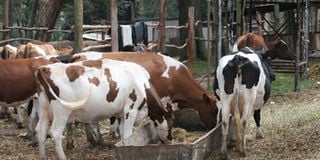
A group of 6,800 dairy farmers have built a milk chilling plant that together with changes in feed and better information has raised the earnings of their company, Metkei Multi Purpose Ltd. File photo
A group of 6,800 dairy farmers have built a milk chilling plant that together with changes in feed and better information has raised the earnings of their company, Metkei Multi Purpose Ltd.
The changes have come as part of a project dubbed East African Dairy Development (EADD) Kenya being implemented in Rift Valley and Central Province to expand milk collection and cooling facilities and assist in marketing chilled raw milk to processors.
The programme offers prompt payment to farmers, besides training and extension services and the provision of AI services, farm inputs, credit services, feed and fodder.
The project is being funded by a host of players in the agricultural sector including the World Agro Forestry Centre (ICRAF).
It has seen farmers switch to fodder shrubs as alternative feeds, leading to increased milk yields and butter fat content; and able to identify milk from cattle suffering from mastitis, an endemic disease in the area that traditionally cost farmers their milk.
“I have three cows which required about five kilogrammes of conventional dairy meal feed a day each, which meant that one bag that costs Sh2,500 could only go for a week.
But with the new shrubs all I need is to mix a kilogramme of conventional feeds with the shrubs and I am covered. It has saved me a lot, not forgetting improving the quality of my milk,” said Kiprop Kiptoo, a farmer in the Metkei area of Keiyo District and a member of Metkei Multi Purpose Ltd.
ICRAF has championed the fodder shrubs as a cost-effective and nutritious way of feeding livestock while increasing soil fertility.
The farmers’ success has attracted guests both local and international with the latest being Bill Gates and officials of the Bill and Melinda Gates Foundation who spent more than two hours on the farm of one of the most successful farmers in the area, Laban Kipkemoi Talam, and his wife Miriam Chepkemei who have embraced fodder shrub farming.
Mr Gates drew water from a borehole in Mr Talam’s home using a manual pulley and witnessed artificial insemination of their dairy cow.
However, it is the milk chilling plant that has most changed the fortunes for the farmers, ensuring they get timely returns for their milk delivery and giving them access to other dairy related services.
Metkei Hall, which houses the chilling plant and offices of managers and accountants, was built partly by farmers in an arrangement where they were meant to raise 10 per cent of the money while financial institutions funded the rest in unsecured loans.
Each farmer was supposed to pay Sh100 to register and buy up to five shares at Sh1,000 a share.
However, an agreement in 2008 allowed all the farmers, even those who couldn’t afford to buy the shares, to become shareholders on the basis of a check off system where the dairy company deducts an agreed amount of money from monthly payments to farmers.
Clear their balance This way, farmers who could not afford the upfront payment have been able to clear their balance. Since starting full operations in 2009 the capacity of the chilling plant has grown to over 33,000 litres per day.
The co-operative pays farmers Sh30 per litre compared with the Sh15 a litre they were previously being paid by vendors.
“A surge in production has emerged following the high prices raising the need for another chilling plant.
But this is a good sign that farmers have now embraced dairy farming and the payments are a worthy incentive,” said Mr Emmanuel Kemboi, the quality assurance manager at the company.
The fully computerised milk delivery system has also made for transparency.
The co-operative has also trained the farmers on increasing the butter content of their milk and on benefits in longer shelf life of supplying milk in aluminium cans instead of plastic cans. No farmer delivers milk in plastic cans any more.
Thus the EADD project has worked on all aspects of the supply chain.
“One way farmers are maximising returns is through the planting of the fodder shrubs and learning to mix various categories of home grown feeds, which ensure that their livestock feed on a balanced diet without having to buy the commercial feed.
This way we have managed to live to the mantra of the EADD project of doubling income for the rural households,” said Sylvia Wafula, a dissemination facilitator in the EADD programme.
However, most recently, the project has been hindered by lack of fodder shrub seedlings, which are seasonal, meaning if farmers don’t get them in on one season they have to wait until the next her season.
“But the farmers have exhibited such resilience against these obstacles and it’s a positive picture to see more farmers getting into this bandwagon thanks to the benefits they see their counterparts reaping,” said Patrick Mudavadi, another dissemination facilitator. The programme aimed to reach 110,000 farmers by last December. - African Laughter
Unlock a world of exclusive content today!Unlock a world of exclusive content today!