The cost of a plate of healthy food in Kenya has increased by 66 percent over the past seven years, a new survey by a group of UN agencies shows, pushing nutritious meals out of reach for millions of Kenyans and worsening the country's nourishment crisis.
The survey reveals that the cost of a healthy diet in Kenya has risen from $2.56 (Sh113.86) per person per day in 2017 to $4.26(Sh189.48) in 2024, locking many Kenyans out of a healthy diet. (The conversion is based on the IMF’s purchasing power parity conversion factor for Kenya which is at about Sh44.48 per international dollar).
The survey was conducted by UN agencies including the Food and Agriculture Organisation (FAO), International Fund for Agricultural Development, United Nations Children's Fund, World Food Programme, and the World Health Organization.
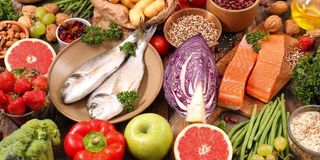
FAO defines a healthy diet as including a balance of fruits, vegetables, whole grains, legumes, nuts, and lean proteins in quantities recommended by nutritionists to meet daily nutrient requirements.
In 2024, Kenya's average cost of $4.26 was just below the sub-Saharan Africa average of $4.37 (Sh194.37), but slightly above the global average of $4.16 (Sh185.03). This suggests that eating healthily in Kenya has become more expensive than the global average, despite the country's continued lagging behind wealthier economies.
In Eastern Africa, the average cost of a healthy diet rose from $3.11 (Sh138.33) in 2017 to $4.48 (Sh199.27) in 2024, while the global increase was from $3.14 (Sh139.66) to $4.46 (Sh198.38) during the same period.
The main drivers behind these price increases include climate-related shocks, rising fuel and transportation costs, dependence on food imports, post-harvest losses, and global market volatility, particularly for nutritious foods such as fruit, vegetables, legumes, and low-fat proteins.
"In Kenya and Uganda, a rapid assessment during the pandemic found that at least 40 percent of respondents altered their diets by consuming a narrower variety of foods, skipping meals, or reducing portion sizes. In Nairobi’s slums, 69 percent of households reported eating fewer meals per day," the report stated.
As the cost of healthy food continues to rise, more Kenyans are unable to afford proper nutrition. By 2024, about 77 percent of the population – equivalent to 43.5 million people – could not afford a healthy diet. This is a significant increase from 69.3 percent (31.1 million people) in 2017. The situation peaked in 2021, when 77.6 percent of Kenyans (41.3 million) were unable to afford a healthy diet, before improving slightly in 2024.
According to the FAO, when people cannot afford nutritious meals, they often turn to cheaper, calorie-dense but nutrient-poor foods. This contributes to malnutrition, stunting in children, and an increasing prevalence of non-communicable diseases such as diabetes and hypertension.
“The scale of financial support directed towards the agricultural sector during the pandemic underscores the significant efforts made by governments to mitigate the crisis. For instance, in 2020 alone, at least $157 billion was targeted to the agricultural sector in 54 HICs and MICs. Of that expenditure, 37 percent was directed to support agrifood producers. Many LICs, including Ghana, Kenya, Nigeria, Senegal, the United Republic of Tanzania, and Zimbabwe, renewed efforts to assist farmers through subsidies aimed at reducing reliance on imported staple foods,” read the report.
The Kenya National Bureau of Statistics (KNBS) reported that 31.7 percent of Kenyans — approximately 16.1 million people — were living below the food poverty line in 2022. The measure reflects the number of people who cannot afford the minimum amount of food needed to meet their basic caloric needs, estimated at 2,250 kilocalories per person per day.