Time flies with great content! Renew in to keep enjoying all our premium content.
Prime
GSK cuts prices of drugs to protect its market share
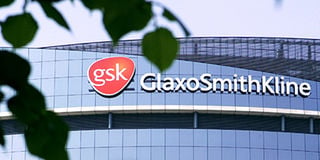
GlaxoSmithKline announced that it had reduced prices of four anti-biotic drugs as a follow-up to similar review of two anti-biotics in the face of stiff competition from cheaper generic drugs, last year. Photo/FILE
Pharmaceutical manufacturer GlaxoSmithKline (GSK) has reduced the prices of four drugs as it moves to protect its market from cheaper generic versions.
The use of generic drugs — the cheaper but equally effective variants of patented drugs — has increased over the years and is estimated to account for 75 per cent of all medicines sold in the country, according to the Kenya Pharmaceutical Distributors Association.
“We want to achieve equity in pricing of drugs across the world based on the economic indicators of every country,” said Mr John Musunga, the managing director of GSK East Africa.
The affected drugs include Amoxil, an anti-biotic that is GSK’s third largest brand in Kenya by sales whose cost has been reduced from Sh27.50 to Sh19.97 a capsule.
The other is Zental, a drug used to treat worms, whose price has been reduced from Sh238 to Sh156.70 a tablet.
The price of Bactroban, used to treat skin infections, has been slashed from Sh836.70 a 15mg cream to Sh485.60.
The Asthma drug, Ventoline Inhaler, has been reduced from Sh394 to Sh282.
Price difference
Patents of the affected drugs, except for Bactroban, have expired meaning that another company can start manufacturing their generic versions without permission from GSK.
However, the price comparison with their generic versions indicates that the price difference is still wide in favour of generics.
For example, the generic version of Amoxil capsule costs Sh5, a Sh22 difference with GSK’s recommended retail price.
The price reduction is a follow-up to last year’s price review of two antibiotics —Zinnat and Augumentin —which had come under pressure from generic antibiotics such as Cifran and Clavulin.
Zinnat works by killing bacteria or germs that cause infection, while Augumentin is an oral antibacterial combination used for the same purpose.
In 2009, the company also effected price cuts ranging from 57 to 78 per cent for all its patented medicines in a similar effort to defend its market share.
The patented medicines are those that GSK has exclusive global rights to manufacture and sell for 15 years before another company starts to formulate a similar product.
The affected medicines then were used to treat malaria, diabetes and asthma, among other diseases.
That price reduction resulted in a fivefold growth in the sales of the affected drugs, GSK said.
The company is hoping that the ongoing price review will also result in similar volume sales to compensate the price cuts.
Intense competition
Mr Musunga said the company has hired additional 70 distributors countrywide as it seeks to penetrate further into rural areas and align its distribution network along the county system.
Pharmacists expect the price review to create intense competition in the Kenya patented drug market where big pharma like Sweden’s Astra Zeneca, French firm Sanofi-Aventis, Bayer Schering Pharma from Germany, Switzerland’s Roche Products and Pfizer Laboratories have manufacturing or sales offices in Nairobi.
Pharmaceutical spending in Kenya rose by 15.69 per cent in 2010 in local currency terms and 20.60 per cent in US dollar terms, according research firm Business Monitor International.
It said multinational drug makers are attracted in Kenya because of encouraging growth rates.
During 2009, pharmaceutical sales in Kenya reached a value of Sh27.12 billion, representing a growth of 15.4 per cent year-on-year.
The research firm said the Kenyan drug market will reach a value of Sh56.2 billion by 2014 and Sh95.44 billion by 2019.