Time flies with great content! Renew in to keep enjoying all our premium content.
Prime
Board calls on farmers to grow more pyrethrum
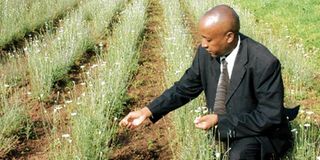
A pyrethrum farm. Kenya’s share of the global export market has dropped from a high of 75 per cent in the 1990s to about 10 per cent. Photo/FILE
The Pyrethrum Board of Kenya (PBK) is betting on prompt payment and issuance of free seedlings and transports services to encourage farmers to boost output and curb falling supplies.
The board is now paying Sh100 of the Sh375 per kilogramme for the best quality of dry pyrethrum flowers on delivery to encourage farmers to grow the crop after they uprooted it on low and delayed pay, says the firm’s managing director Dr Isaac Mulagoli.
“Our intention is to have adequate flowers that would help Kenya reclaim its lost market share,” said Dr Isaac Mulagoli the firm’s managing director, arguing that the free services would also boost the farmers take home pay.
Dried flowers
“We are partly paying the farmers delivering dried flowers Sh100 then cover the deficit after the sifting is done.”
Kenya’s share of the global export market has dropped from a high of 75 per cent in the 1990s to about 10 per cent.
In the 1990s, the board used to process 17,710 tonnes of flowers, but this has since dropped to about 800 tonnes on reduced output from farmers who uprooted the crop.
Previously, farmers relied on own transport to reach the collection centres, which have now been increased to between 5,000 and 6000 centres countrywide from less than 1,000 two years ago.
Dr Mulagoli said plans are afoot to replace the Sh100 advance payments with a monthly paylike in the tea industry—a move that will allow the Nakuru based factory to run regularly.
“This will allow the factory settle on a monthly processing instead of the previous processing schedule that occurred after thee months of accumulation of dried flowers,” he added.
The processing of the dried seeds was done last August.
Farmers interviewed by the Business Daily say they would only return to growing the crop once satisfied that the PBK latest plans are sustainable.
Non-payment
“The non-payment of deliveries, lack of credit facilities, demanding labour and expensive farm inputs made some us uproot our crops,” says John Kahuria, a farmer in Molo who adds that he has under five acres under the crop compared to 25 acres four years ago.
Last year, the board increased producer prices by 71 per cent in an effort to encourage farmers to boost output.
The last price review was done in 2001.
Dr Mulagoli dismissed the impending liberalisation plans saying that it might not succeed because the sector was still on the recovery path.
“Liberalisation cannot work because there are no flowers the board is contracting farmers to grow and if you do away with the board then sector will be no more,” he said.
Unlock a world of exclusive content today!Unlock a world of exclusive content today!