Time flies with great content! Renew in to keep enjoying all our premium content.
Prime
Builders find low-cost alternative in earth bricks
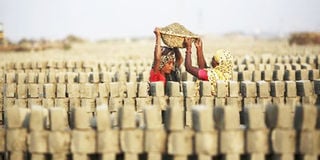
Suppliers reckon that with the block press machine, the cost of housing can come down by 50 per cent compared to normal concrete bricks. Photo/REUTERS
Demand for stabilised earth bricks is on the rise as builders seek to cut construction material costs in the country.
This has increased demand for block press machines that are used to mould clay bricks, according to Makiga Engineering Ltd, a local supplier of the machines.
“Most of the buyers are from Nyeri, Kitengela, Athi River, Kibera, Kiambu and the country-side” said Anne Wambari, a procurement and Logistics officer with Makiga Engineering.
She said the company gets 10 orders per week compared with the one per week average two years ago.
The demand for clay compressors comes at a time when cement prices have risen from Sh420 per 50 kilogram bag in 2003 to Sh700 currently.
Rising demand
Suppliers reckon that with the block press machine, the cost of housing can come down by 50 per cent compared to normal concrete bricks.
Other suppliers include Hydraform Kenya Ltd, and Ecplaza global, which imports and supplies automatic versions of the machine.
A study done by UN Habitat-Kenya last year shows that a concrete house that costs Sh2.2 million to construct would cost Sh720,000 if done with stabilised soil bricks.
Each block is composed of a mixture of 70 per cent soil, 20 per cent sand and 10 per cent cement compared to normal blocks which consume more than three times the amount of cement.
The machine which come in automatic and manual varieties can make bricks from any kind of soil except black cotton.
The blocks inter-lock when assembled, resulting in very sturdy structures that are resistant to diverse environmental conditions, this helps to reduce the amount of mortar required in construction.
Rising demand has seen the machine’s average price rise from Sh50,000 two years ago to Sh80,000 presently.
Average price
The machine can produce between 450 to 500 bricks a day with each block having an average market price of Sh10, more than half the price of concrete blocks and stone blocks which go for between Sh20 and Sh35.
But the clay brick houses are not classified as permanent in building regulations, a factor that has seen their uptake lag behind despite their potential to cut housing costs.
“The most serious impediment in the industry currently is the perception that non-brick and mortar construction contravenes building regulations,” said Ark Consultants director Reginald Okumu. “Once this is sorted out, then homes can be set up in a cheaper and faster way.”
Last year’s census results indicate that 450,000 houses in the country are built with soil bricks, a growth of 14 per cent from 350,000 in 1999.
The low maintenance machine has been one of the initiatives spearheaded by the Youth Affairs Ministry to help foster enterprise among young people given the high demand for housing in the country.
Unlock a world of exclusive content today!Unlock a world of exclusive content today!