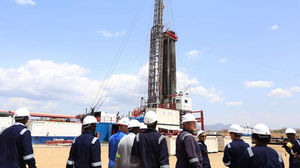
Kenya has broken ground on what it says will be the world’s first geothermal-powered fertiliser project in a bid to lower the cost of key farm input and boost food security plans.
State-run Kenya Electricity Generating Company (KenGen) and China’s Kaishan Group on Monday entered into a joint venture to build a plant with a capacity to produce between 200,000 and 300,000 tonnes of ammonia-based fertiliser every year.
Kaishan’s local unit, Kaishan Terra Green Ammonia Ltd, will construct and operate the facility, while KenGen will supply 165 megawatts of geothermal energy to power the production of green ammonia and fertiliser for the project for 30 years.
The facility is expected to stabilise local fertiliser prices by reducing dollar-denominated import exposure, KenGen said in a statement, projecting to generate an estimated $13 million (about Sh1.68 billion) in annual net profit from the plant on completion.
“[This is] a milestone in clean industrialisation,” KenGen managing director Peter Njenga said in a statement, adding that geothermal power is the “bridge between Africa’s green energy potential and its manufacturing future”.
Kenya largely depends on fertiliser for farming, and its pricing remains the single biggest variable driving output of staple maize.
The country spends tens of billions of shillings to ship between 800,000 and 900,000 metric tonnes of fertiliser every year from countries such as Russia and Saudi Arabia, according to official figures.
President William Ruto’s administration has been subsidising fertiliser prices since taking power in September 2022 through the National Cereals and Produce Board to reduce the cost burden for farmers and bolster production.
Speaking at the groundbreaking ceremony, Dr Ruto said the plant would help boost food security, lower import bills, and create jobs.
“This project shows that Kenya is not just a leading producer and consumer of clean energy; we are now going further to add value and generate prosperity from it,” he said.
“By harnessing our geothermal wealth, we are lowering fertiliser costs, supporting our farmers, and contributing to global climate goals.”
The launch of the project has come at a time when the latest official numbers have shown that Kenya has cut fertiliser imports for the second straight year, signalling a cooling of the government’s subsidy programme that drove record shipments in 2023 and stood at the heart of President Dr Ruto’s food security agenda.
Fertiliser imports between January and June 2025 stood at 443,701 tonnes, valued at nearly Sh25.63 billion, down from 445,857 tonnes worth Sh27.71 billion in the same period of 2024, data collated by the Kenya National Bureau of Statistics indicate.
The latest half-year numbers extend the decline from the 2023 peak of 629,566 tonnes worth Sh44.8 billion, representing a 29.52 percent fall in volume and 42.83 percent decline in value over two years.
“Our agriculture is highly dependent on fertiliser prices, with high prices leading to a decline in maize output nationally. As we know, maize is the staple crop that feeds millions of Kenyans. That is why domestic, competitively priced fertiliser matters not just for commerce, but for food security for our people.”
The facility is forecast to create more than 2,000 direct and indirect jobs across construction, operations, maintenance, logistics and supply chains.
Job openings from the project include those for plant operators, process engineers, laboratory technicians, electricians and small businesses plugged into the value chain.
Kenya currently imports nearly all fertiliser consumed domestically, exposing farmers to currency swings, Red Sea freight volatility and commodity price shocks linked to global gas markets — because about 98 percent of world ammonia is made using natural gas.
A green-ammonia plant will help Kenya realise import substitution and climate competitiveness. The project is forecast to avoid more than 600,000 tonnes of carbon dioxide emissions each year.