Players in the manufacturing and services sectors took the biggest hit from anti-government protests and renewed price pressures on inputs such as fuel in July, findings of a fresh monthly survey suggested, cutting overall business activity at the fastest pace in 12 months.
Most companies in manufacturing and services, such as banking, cut back on activities because of youth-led disruptions of businesses, amid reduced orders for goods and services in a tough economy for both households and businesses.
The Stanbic Kenya Purchasing Managers Index (PMI) —which measures monthly performance of key indicators for the private sector such as output, new orders and employment — fell at the sharpest rate since the peak of anti-government demos a year earlier.
The PMI, a gauge of activities in agriculture, manufacturing, construction, wholesale and retail, and services, dropped to 46.8 in July from 48.6 in the prior month.
That reading, which signaled contraction in private sector activity for the third month in a row, is the lowest since 43.1 percent in July 2024.
PMI Readings below 50 signal a decline in month-on-month private sector deals, while levels above point to growth.
About 38 percent of nearly 400 corporate managers interviewed in the PMI survey between July 10 and 29 reported a downturn in deals, with 17 percent recording growth.
“The Stanbic Kenya PMI suggests that private sector output and new orders weakened for a third month in a row, reflecting the negative impact that recent protests have had on businesses,” Stanbic economist Christopher Legilisho wrote in the report published on Tuesday.
“It also reflected harsh economic conditions crimping consumer spending, more so in services and manufacturing. Positively, there were expansion in agriculture, construction, and wholesale and retail, but it was not sufficient to lift overall economic output” he added.
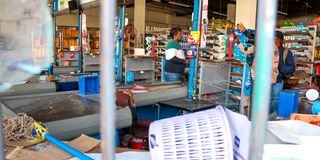
Violent anti-government protests to mark the first anniversary of the historic, deadly Finance Bill 2024 demonstrations on June 25 and Saba Saba Day protests on July 7 left more than 60 civilians dead and property worth millions of shillings either looted or destroyed.
Independent Policing Oversight Authority, Kenya’s police watchdog, put the death toll on June 25 at 23 civilians, while 41 others lost their lives on the Saba Saba Day — an annual pro-democracy march to mark the anniversary of the July 7, 1990 demonstrations which led to a return to multiparty democracy in Kenya.
Companies also complained of a bump in input costs at the quickest rate since the year began after purchase prices increased fastest since December 2024, the PMI report findings suggest.
The firms passed on the price pressures to consumers, with output prices climbing fastest in six months.
“Pricing pressures increased due to a rise in fuel prices by the Energy and Petroleum Regulatory Authority (Epra) in July. Firms also complained that higher taxes contributed to an increase in purchase and operating costs,” Mr Legilisho wrote.
Epra in July raised the price of petrol and diesel by Sh8.99 and Sh8.67 per litre, respectively, to retail at Sh186.31 and Sh171.58 in Nairobi.
Fuel prices make a considerable contribution to inflation as Kenya relies heavily on diesel for transport, power generation, and agriculture, while kerosene is still used by poor households for cooking and lighting.
Annual inflation in July increased to 4.15 percent from 3.82 percent a month earlier, marking the fastest growth in prices since August 2024 at 4.36 percent.
Business leaders are, however, hopeful of a turnaround in 12 months with plans to expand product offerings, purchase land, open branches, and invest in novel marketing.
“Optimism regarding the year-ahead outlook for business activity was the highest observed in 15 months, although it remained soft by historical standards,” Stanbic wrote in the PMI report for July. “Roughly 21 percent of surveyed businesses projected an increase in output.”