Anxiety as transporters seek 122pc jump in shipment fee

Cargo trucks loaded with imported iron sheets ready to leave the port of Mombasa in this photo taken on November 18, 2024.

Photo credit: File | Nation Media Group

Traders and consumers face price pressures after transporters proposed an increase in the cost of ferrying a container of cargo from the Mombasa port to the Uganda capital, Kampala, by up to 112.4 percent.

The Kenya Transporters Association (KTA) has recommended a revised minimum transport rate along the Northern Corridor based on distance and the value of goods being transported.
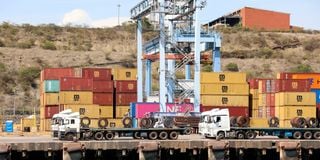
The Northern Corridor is the busiest transport route in East and Central Africa, connecting the Mombasa port to landlocked countries, including Uganda, Rwanda, Burundi, South Sudan, and the Democratic Republic of Congo.

The lobby said the cost of transporting high-value goods such as coffee and cocoa has increased substantially due to highway attacks, coupled with a night ban on shipping such goods.

KTA chairman Newton Wang’oo said the minimum rate of such goods should be Sh258,000 per container for high-value cargo, and Sh161,000 per container for lower-value commodities.

The transporters argued that the prevailing rate of about Sh116,000 per container along the Kampala-Mombasa corridor does not reflect the exceptional risks involved in transporting goods valued between Sh10.3 million and Sh19 million per container.

“The association is recommending that the rates of cargo along the corridors should be calculated based on distance, cargo value, and weight to ensure pricing reflects the operational, security, and financial risks borne by transporters,” Mr Wang’oo said.

“By avoiding night driving to reduce chances of cargo theft, the cost of ferrying such goods continues to increase since trucks are paid per day, the current pricing is commercially indefensible and does not justify the operational security and financial risks borne by transporters,” said Mr Wang’oo.

He claimed that transporters are being forced to pay taxes and duties on goods stolen by organised criminal cartels, even though they are victims of the theft.

At the same time, KTA has protested the Kenya Revenue Authority's move to impose duties and taxes on cargo that has been stolen while under customs control, terming the practice punitive and unjust.

Mr Wang’oo said the East Africa Community Customs Management Act (EACCMA) 2004 places automatic liability on road transporters for stolen goods before any investigation or legal determination, terming the framework as fundamentally unfair as transporters are victims, not perpetrators of criminal theft and accidents.

“Apart from increasing transport cost, the association also recommends that cargo owners provide security escorts for all high-value shipments and arrange comprehensive cargo insurance, with written confirmation issued to transporters,” said the chairman.

The association further urged the inclusion of explicit protection clauses in transport contracts and advised transporters to secure sufficient carriers’ liability insurance coverage.

Additionally, KTA advised its members to avoid night driving where possible, using only secure and approved parking locations, and moving high-value cargo in convoys where practicable to enhance security along transport corridors.

The association decided to amend the rate after eight reported cases of stolen coffee occurred within a period of two months, where the cost was transferred to transporters.

According to KTA, when theft occurs before cargo is cleared, trucks are impounded by KRA, and demand notices are issued requiring payment of customs duties and taxes on the missing goods.

The association further noted that transporters often face parallel claims from cargo owners seeking compensation for the lost goods, with some withholding freight payments, leaving operators trapped between tax demands from the revenue authority and commercial claims from clients.

Follow ourWhatsApp channel for the latest business and markets updates.

PAYE Tax Calculator

Note: The results are not exact but very close to the actual.