Gulf Energy wants the government to extend the railway to Lokichar in Turkana County by 2030 to transport crude oil to the port of Mombasa, marking a departure from the State's earlier plan to build a pipeline.
The firm has in its Field Development Plan (FDP) proposed the construction of a meter-gauge railway (MGR) from Lokichar, then connect it to the main MGR line at Kitale, Eldoret, Nakuru, Nyahururu, or Nanyuki.
The proposed construction of the railway, to be fully funded by the government, is a shift from the earlier plan to build an export pipeline from the oilfields to the port of Lamu at an estimated cost of $1.5 billion (Sh193.5 billion at current rates).
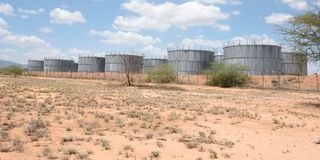
Gulf Energy targets to start commercial production of the oil from six discoveries within blocks T6 and T7 in South Lokichar by the end of 2026 and will initially rely on trucks to transport the commodity when production starts at 20,000 stock tank barrels per day (stb/d).
“GEBV (Gulf Energy BV) requests that GOK (Government of Kenya) provide a railway line in Lokichar, Turkana by H2 (second half) 2030 to support increasing production to 50,000 stb/d,” Gulf Energy says in the FDP, which is now awaiting ratification by Parliament.
The combined costs of trucking and rail transport in the two phases are estimated to be $5.32 billion (Sh687.29 billion at current rates).
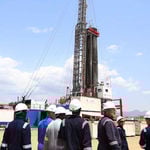
Oil production will be done in stages, with the first stage targeting 20,000 stb/d from 48 wells in the Ngamia and Amosing fields. Monthly exports are projected at 600,000 barrels.
The second phase will ramp this to 50,000 stb/d and will extend the project area to the Twiga, Ekales, Agete, and Etom oilfields. The monthly exports are anticipated to jump to 1.5 million barrels.
The FDP shows that 600 trucks will be deployed daily in phase one and 155 rail wagons daily when the production is stepped up in phase two.
“Apart from extension of the railway line, the Government or its railway agents will need to invest in sufficient rolling stock, railway line rehabilitation, and construct appropriate railway siding at KPRL (Kenya Petroleum Refineries Limited) to enable the operation,” Gulf added.
The shift to a hybrid transport of trucks and trains is intended to minimize capital cost while maintaining production potential, helping Kenya to fast-track gains from the project.
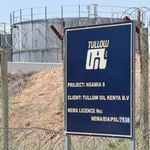
Gulf fully bought the Block T6 (formerly 10BB) and Block T7 (previously 13T) from Tullow Kenya BV (the Kenyan subsidiary of British oil explorer) in a $120 million (Sh15.5 billion) deal that was closed in October this year.
The Kenyan oil company intends to start commercial production of the crude oil by December 2026. This plan got a major boost after the Ministry of Energy approved its FDP and sent it to Parliament for ratification.
The MGR currently terminates at Eldoret, and its extension to South Lokichar is seen as more viable than using trucks per day to ferry the crude oil from the wells to Eldoret, from where it is loaded onto the rail.
Failure to extend the rail to South Lokichar could see Gulf forced to deploy a fleet of 1,500 trucks to ferry the commodity when production progresses to 50,000 stb/d.
Gulf says that the government can opt to extend the Standard Gauge Railway (SGR) line from Naivasha to Lokichar, setting the stage for haulage of 561 barrels per wagon.
The SGR currently terminates at Naivasha, but it is set to be extended to Kisumu and the border town of Malaba.
The extension, which is meant to ease movement between Kenya and Uganda, is likely to be funded via a 15-year bond worth Sh390 billion.