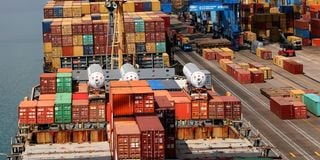
The Kenya Plant Health Inspectorate Service (Kephis) has rejected a call by the Kenya Maritime Authority (KMA) to suspend the newly introduced mandatory inspection of cargo containers for cleanliness and suitability in transporting goods, saying it is mandated to protect the public from harm.
Kephis cautioned KMA against undermining its role in facilitating trade through safe standards.
“We received communication from KMA, but we are calling on each government body to maintain its lane. Kephis has its own mandate, and we have to protect crop products to make our flowers, tea, coffee, and other products compliant with the international market,” Kephis chairman Joseph M’eruaki said.
Kephis MD Theophilus Mutui, said the inspections have seen unsafe cargo intercepted at the Mombasa port.
“Through our routine, in late July, our inspectors intercepted a ship carrying a consignment with a heavy infestation of the Asian Gypsy Moth, which is a serious pest at the Port of Mombasa, where we managed to successfully treat and disinfect the ship,” he said.
“With this, once we either stop or suspend executing our duty, Kenyan exports such as flowers will lose market since they would not comply with international standards,” Prof Mutui said.
Kephis began inspecting all cargo containers, both loaded and empty, in July.
The move was, however, met with uproar as traders in crop products reported massive disruptions in their businesses owing to the inspection rule, with some cargo consignments being left behind at the Mombasa Port as impatient shipping lines set sail amid delays.
Spooked by the outcry from traders, KMA, which is responsible for regulating maritime transport by ensuring safety standards and compliance with international maritime conventions, asked Kephis to suspend the container inspection rule to limit the disruptions to trade.
In a notice dated August 12, 2024, KMA Director General Omae Nyarandi asked Kephis to suspend charging for inspection of containers until pending issues are addressed.
“Exports are critical to the Kenyan economy, and government agencies are obliged to intervene and provide a way forward on any operational undertakings that are likely to hamper the seamless flow of the exports in the logistics chain,” he said in his communication to Kephis.
According to KMA, exports were being delayed due to the non-issuance of container inspection certificates for agricultural export containers, which was caused by shipping lines not paying the respective inspection charges.
But in a rejoinder, the Kephis management maintained on Thursday that the container inspection rule would not be dropped and urged port users to support its worthy cause.
Kephis stated that, since 1 July this year, all shipping lines and agents have been required to share the manifest for both imports and exports with the department in advance, in order to facilitate efficient inspection and compliance.
Shipping lines and agents are required to pay a container inspection fee of Sh500 and a vessel inspection fee of Sh2,000 to facilitate the inspection.
However, the Kephis rule has been opposed by stakeholders, including the Kenya Shipping Agents Association and the Shippers Council of Eastern Africa, who claim that it amounts to an increase in sea and air freight charges.