Time flies with great content! Renew in to keep enjoying all our premium content.
Prime
Mobile phones: Counterfeit menace to persist
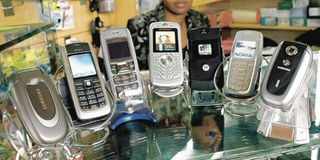
The country is currently swamped with counterfeit phones. PHOTO /COURTESY
A spot check on the streets of downtown Nairobi shows lots of exhibitions lined up on each side of the street with a majority of them selling cell phones.
Each exhibition window is lined up with different types of handsets to cater for the needs of different buyers who stroll the streets.
The price tags on the handsets indicate that they are not as costly as they would in uptown arcades. For as low as Sh4,000 one can get an imitation of the Nokia E-series or even a blackberry which would cost eight times more in uptown.
This difference in price should raise eyebrows. Indeed most of these handsets are counterfeits.
Sadly, these handsets have flooded the Kenyan market, and the reasons for this trend are varied.
These phones are very affordable compared to the original models and this makes them appeal to the low end consumer.
The cell phone has become more of an essential in the Kenyan society but most people still don’t have the extra cash to invest in a phone so they easily opt for the counterfeits.
Cell phone theft is also common occurrence on the city. In order not to feel the pinch in the pocket when one loses a cell phone some people opt for the counterfeit phones.
Kenyans have also developed the habit of having multiple simcards to enjoy offers by mobile telephone providers.
Earlier when people started developing the need to carry double lines, one would have two handsets each with its own simcard. Carrying two cell phones is bulky but most Chinese models come with multiple simcard slots. You are able to have as many as four simcards in one handset, in other words you can be a subscriber to all the mobile telephone providers and be accommodated in one handset.
These phones also give an array of functionalities that most people would wish to have in a phone but would generally make it cost more.
t the low prices one gets to have Bluetooth, incredible megapixels on the camera, internet browser, mp4/mp3 player capability, memory card slot with lots of space, mobile TV , touch screen and many more.
If one is looking for a gizmo this would be it.
Original handset dealers bear the effects of availability of these counterfeits in the market. In order not to lose their market share, they have had to develop products that can compete with the counterfeits.
This is not only in price but also in functionality.
Nokia is one of the companies that has appreciated the Kenyans need for business phones. It has intergrated features such as the QWERTY keypad, instant messaging and push emails capability.
In addition to these, users want to have entertainment, mp3/mp4 compatibility, social network chat services and good camera quality. Nokia has captured this in the production of the C3/X2 model.
Alcatel has also done the same with the OT 800 series, which come with multicolored casing making it very attractive and trendy.
The other major functionality that the conventional handset manufacturers have taken into consideration is the need for multiple sim cards in each handset, Samsung have done better than the other manufacturers in this field. The have a wide range of dual sim handsets that go for different price ranges attracting the low end market that appeals to the low income earners.
Nokia have also managed to capture this market…they have produced a dual sim card handset known as ‘Dabo dabo’.
Phone manufacturers from Asia are also battling to capture the booming handset market in Kenya. However the still have to fight the enigma of being associated with counterfeits.
Ken Miseda is a Masters Student in Communication Studies at the University of Nairobi.
Unlock a world of exclusive content today!Unlock a world of exclusive content today!