Time flies with great content! Renew in to keep enjoying all our premium content.
Prime
Export taxes place Kenya’s leather industry on growth path
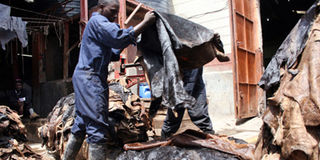
A worker arranges fish skins at KIRDI (left) and a technician at Zingo: The government estimates that value addition could raise leather earnings to Sh9 billion while the Leather Development Centre estimates that if Kenya processed all its hides and skins, income could hit Sh16 billion a year. file
Is the European Union helping or hindering economic development in Kenya? As negotiations continue between Brussels and the East African Community on a free trade agreement, a number of contentious issues remain to be resolved. One of the most important is Kenya’s use of export taxes.
The current text of the draft trade agreement would severely limit the use of such taxes. If this EU demand stands, Kenya’s development prospects are likely to be hindered, at least if the leather industry is anything to go by. Recent research shows the benefits of the government’s use of export taxes and what can be achieved by defying the EU’s ideological commitment to free trade.